
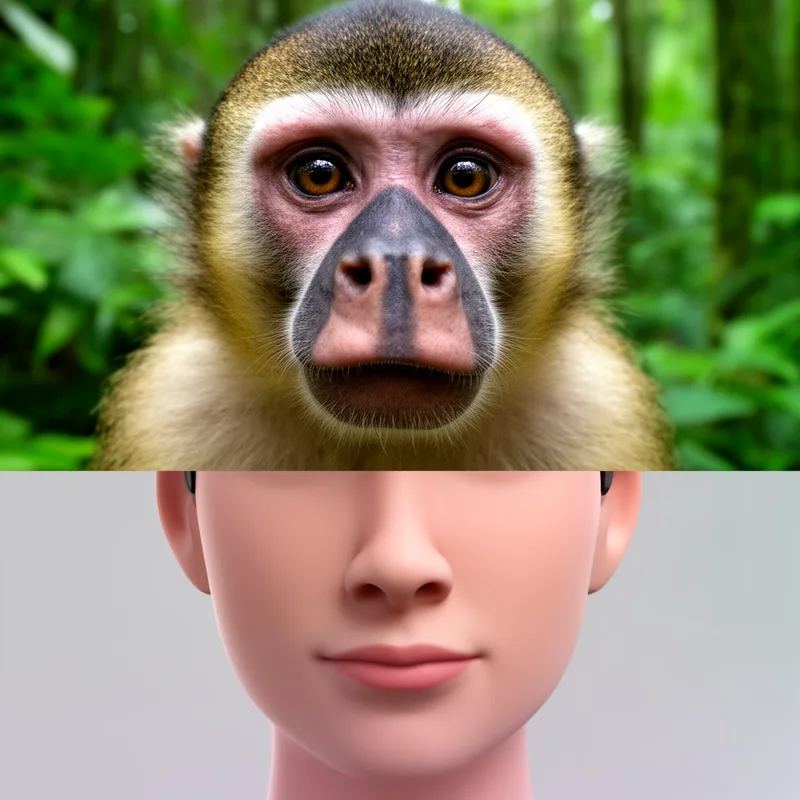
platyrrhine
- adjective
- /ˈplætɪˌraɪn/
- Specialized
- The scientist studied platyrrhine monkeys in the rainforests of South America.
Examples
-
The platyrrhine nose distinguishes New World monkeys from their Old World counterparts.
-
She has a platyrrhine nose that is quite distinctive.
-
Certain indigenous groups are described as having platyrrhine nasal features in anthropological studies.
-
The platyrrhine monkeys are known for their wide nostrils.
-
Certain indigenous groups are described as having platyrrhine nasal features in anthropological studies.
-
The platyrrhine nose distinguishes New World monkeys from their Old World counterparts.
-
She has a platyrrhine nose that is quite distinctive.
Synonyms

Having a wide, flat nose with nostrils far apart

A wide, flat nose with nostrils far apart like monkeys from the Americas

About monkeys from Central and South America or people with broad, widely spaced nostrils

Having a wide nose with nostrils far apart

A person or animal that has a wide, flat nose
Antonyms

- Specialized
Relating to monkeys and apes from Africa and Asia that have nostrils close together and facing down
Surface Forms
Morphology
platyrrhine = platy + rrhine (opaque) = platy + rrhine
The term is formed from Greek combining forms ('platy-' + '-rrhine') used in technical taxonomy; these elements are not familiar to average B1 learners, so the meaning is not derivable from common English vocabulary.
Etymology
Platyrrhine comes from Greek parts platy- meaning 'broad' or 'flat' and rhin- meaning 'nose', the same rhin- you see in rhinoceros. So platyrrhine as an adjective describes a broad, flat nose with nostrils set far apart, which explains its use for some New World monkeys and for people with wide noses.

