
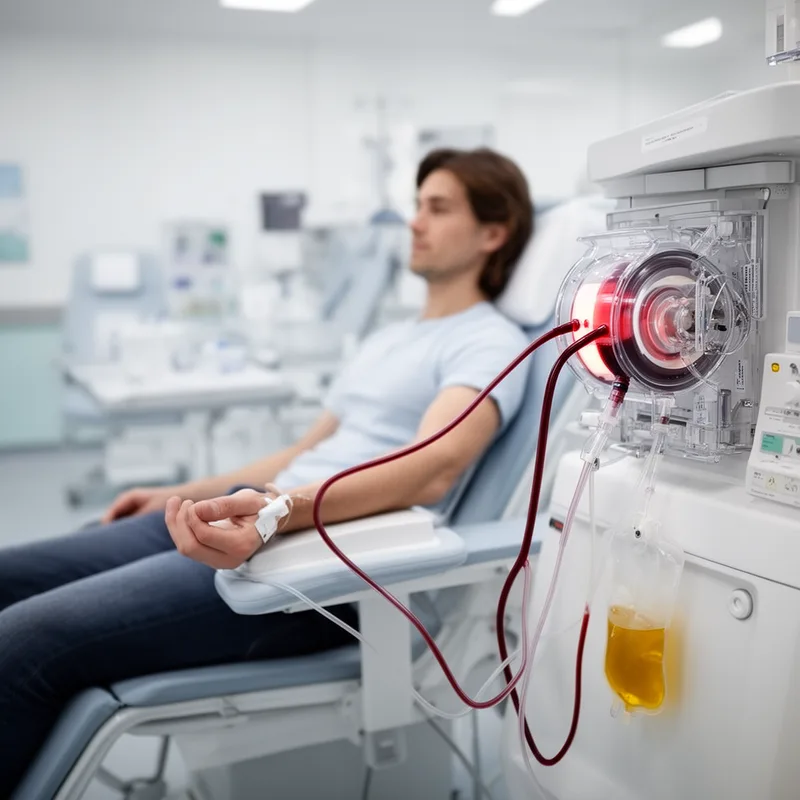
plateletpheresis


 1
9.7
- noun
- /ˌpleɪt.lət.fəˈriː.sɪs/
- Specialized
- The doctor recommended plateletpheresis for the patient.
Examples
-
The hospital conducts plateletpheresis to collect platelets for patients with blood disorders.
-
Have you ever undergone plateletpheresis?
-
After undergoing plateletpheresis, the donor felt perfectly fine and resumed normal activities.
-
Modern blood banks use automated machines for efficient plateletpheresis.
-
Doctors often recommend plateletpheresis for patients with extremely high platelet counts to reduce the risk of complications.
-
During plateletpheresis, only the platelets are collected, and the rest of the blood is returned to the donor's body.
-
After undergoing plateletpheresis, the donor felt relieved knowing their platelets were helping patients in need.
Synonyms
 1
9.9
A medical procedure that takes blood, removes parts, and returns the rest to the donor
Surface Forms
Morphology
Etymology
The word plateletpheresis joins platelet ('tiny blood cell that helps stop bleeding') and pheresis ('removal' or 'taking away'). So, it names the medical process where platelets are taken out from whole blood and the other parts are returned to the donor.