
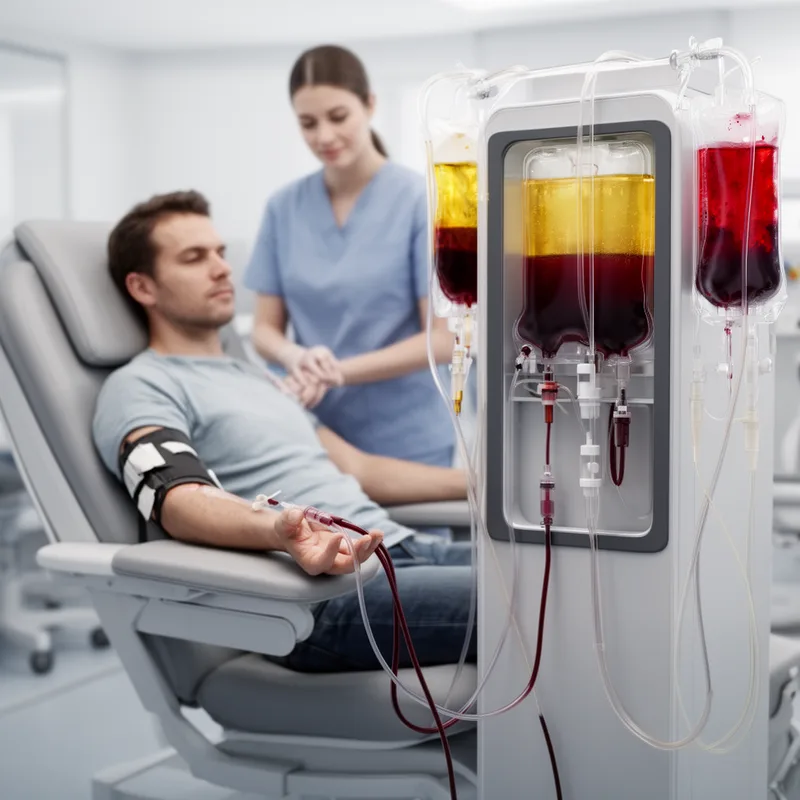
apheresis


 1
9.9
- noun
- /əˈfɛrɪsɪs/
- Specialized
- Did the apheresis example have a recycle stream in it?
- lipid apheresis
Examples
-
To determine levels of CTCs, blood samples were collected before apheresis.
Blog text (7) -
Mononuclear cell apheresis was done on days 4-6 for the five patients in whom the CD34 ratio had increased to more than 0.1% of peripheral white cells.
Academic text (2002) -
So an apheresis machine is an external device that you pump blood into to.
-
The anticoagulant used in the apheresis donation process will temporarily bind with the calcium in your blood.
Blog text (32) -
Apheresis is commonly used to collect blood components like plasma, ensuring only necessary parts are removed during the donation.
-
During pheresis, the donor's blood is separated so that specific components, such as platelets, can be extracted for medical use.
-
The doctor explained that pheresis helps in treating patients by selectively removing harmful blood components while returning the rest.
Synonyms
 3
9.9
A medical procedure that removes the liquid part of blood and returns the rest to the person
 1
9.7
A medical procedure that removes small parts of blood that help stop bleeding and returns the rest to the donor

A medical treatment that takes blood, keeps some parts, and returns the rest
Surface Forms
Morphology
apheresis = a + pheresis
The medical sense is formed from the same Greek combining elements but functions as a technical borrowing (e.g., plasmapheresis), so its internal parts are not transparently meaningful to general learners.
Etymology
Apheresis comes from Greek parts a- 'away' and phairein 'to take', so it literally means 'taking away'. In medicine it is a procedure that 'takes away' part of a person's blood and returns the rest, which is why the word fits the treatment.