
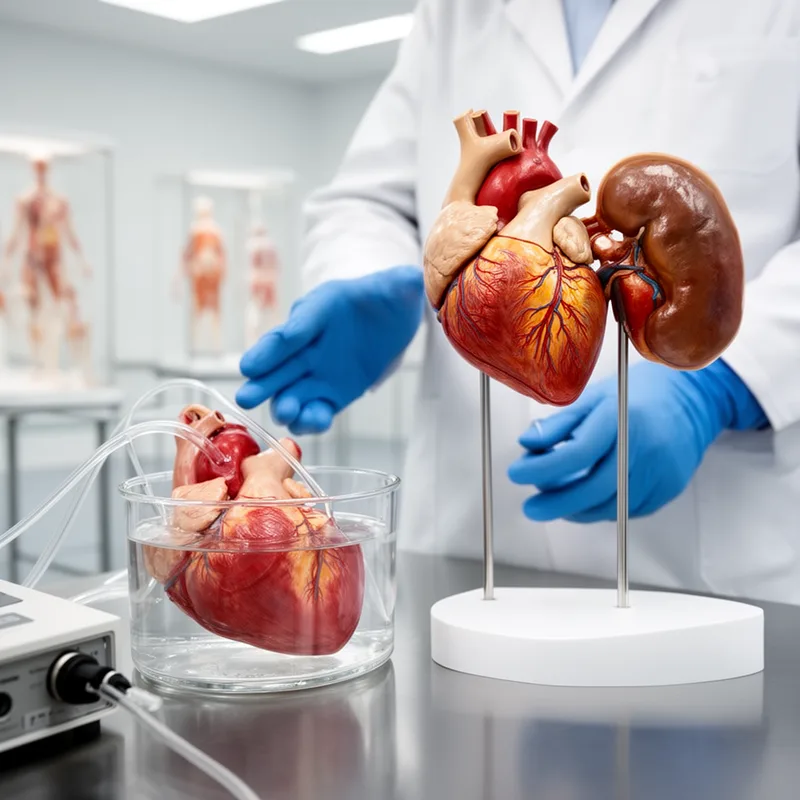
plastination
 1
9.9

- noun
- /plæstəˈneɪʃən/
- Specialized
- No organizations analogous to the cryonics industry yet exist to offer plastination services, but that may only be a matter of time.
- plastination process
- plastination laboratory
Examples
-
Below is quoted a long article by a plastination advocate, published a few weeks back.
Blog text (26) -
In any case, I thought I'd point out a couple of articles on plastination from recent days:
Blog text (14) -
Relationships come and go, but plastination is forever.
-
Cryopreservation requires ongoing low-temperature storage, whereas plastination does not.
Blog text (14) -
They taught me all about bone plastination, how to preserve your body for Nikki.
-
As you might note, there is some thought that plastination might be cheaper than cryonics, but this may or may not pan out once total costs over time are figured in.
Blog text (14) -
Plastination is the basis for a possible technology platform that might compete with the low-temperature vitrification used in cryonics.
Blog text (14) -
Through May 30: "Body Worlds & The Brain." Visitors can learn about anatomy, physiology, and health by examining real human bodies that have been preserved through a process called plastination.
Academic text (2011) -
Medical students can study detailed human anatomy thanks to a technique called plastination.
-
The museum displayed a variety of specimens preserved using plastination to teach visitors about human biology.
How Preserved
- Specialized
1
6.8

- Specialized
1
9.9
125
3.8
32
3.4
Surface Forms
Morphology
plastination = plastinate (transparent) = plastic + ion
The noun is a regular nominalization of the verb 'plastinate' (process of using plastics to preserve tissue), so the relation is directly inferable.
Etymology
Plastination comes from the word plastic, which comes from an old Greek root plast- meaning 'to shape'. So plastination is literally about 'shaping' and preserving real tissue by replacing its water and fat with plastic, making bodies hard and long-lasting for study.