
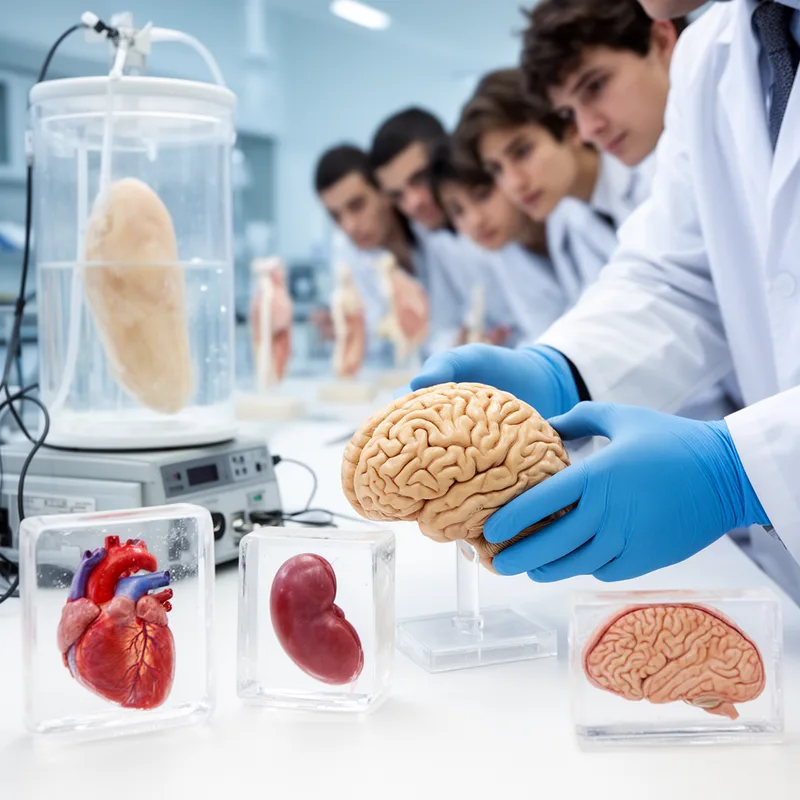
to plastinate
- verb
- /ˈplæs.tɪ.neɪt/
- Specialized
- To prepare the materials for the exhibition, they will plastinate the biological samples.
Examples
-
In the lab, they can plastinate tissues to create long-lasting educational models.
-
After the brain was plastinated, students could examine its anatomy without risk of decay.
-
Scientists often plastinate animal specimens to study their internal structures in detail.
-
The medical school decided to plastinate several organs for display in the anatomy lab.
-
They will plastinate the specimens for the anatomy class.
-
The museum plastinated several human bodies for educational purposes.
-
The scientist decided to plastinate the specimen in order to study its anatomy in detail.
How Preserved
- Specialized
 9
6.0
9
6.0


- Specialized
496
3.4
570
1.0
19
3.4
Surface Forms
Morphology
plastinate = plastic (semi-transparent) = plastic + ate
The verb is formed with the suffix '-ate' on the basis of 'plastic', which suggests 'make or treat with plastic', but the specific technical process of replacing tissue fluids with plastics is specialized and not fully inferable by general learners.
Etymology
Plastinate comes from the root plast-, the same root as plastic, which means 'to mold' or 'shape'. So to plastinate is to replace the water and fat in tissue with plastic, turning the tissue into plastic so it is preserved for study.