
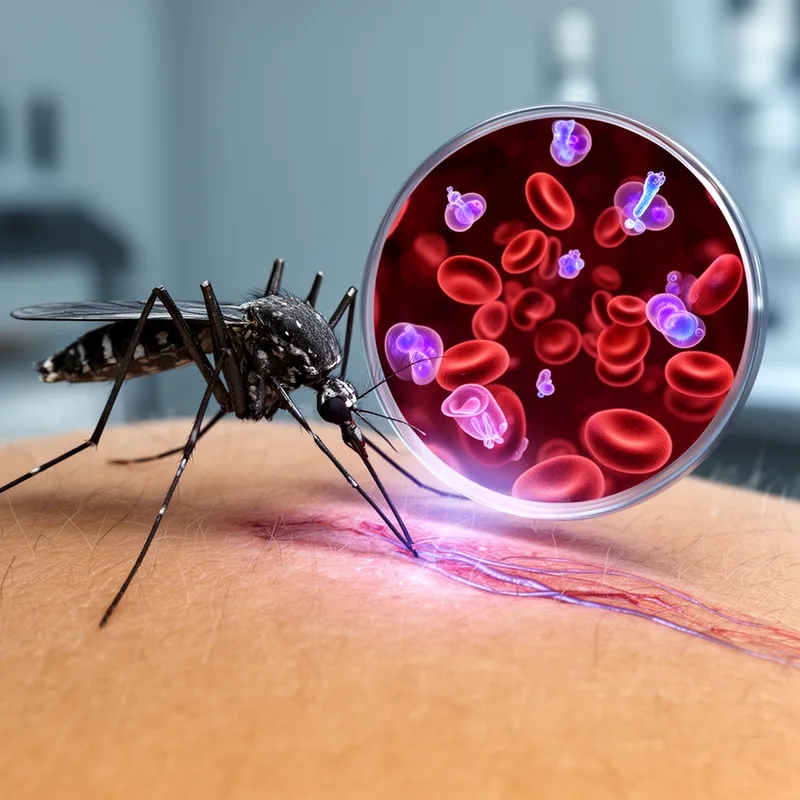
plasmodium
- noun
- /plæzˈmoʊdiəm/
- Specialized
- There are four types, of which plasmodium falciparum is by far the most dangerous.
Examples
-
Infected individuals may exhibit symptoms caused by the Plasmodium protozoan, such as fever and chills.
-
They're Plasmodium falciparum, Plasmodium vivax, Plasmodium melodiae and Plasmodium ovale.
-
I'm talking about Plasmodium, which causes malaria.
-
The Plasmodium parasite is transmitted to humans through the bite of an infected mosquito.
-
Researchers are studying the life cycle of Plasmodium to develop better malaria treatments.
Synonyms

 1
4.1
1
4.1

A very small single cell that lives in human blood, spreads by mosquito bites and causes malaria
Compounds

- Specialized

 1
8.4
1
8.4
A parasite made of one cell that causes the most severe kind of malaria in humans
- Specialized
A one-celled parasite that causes a form of malaria in people with returning fevers
Surface Forms
Morphology
Etymology
Plasmodium comes from the Greek root plasma meaning 'something formed', the same root in plastic which means 'able to be shaped'. Scientists used this name because, under the microscope, each tiny parasite looks like a small formed body in the blood, so plasmodium now names the parasite that causes malaria.