
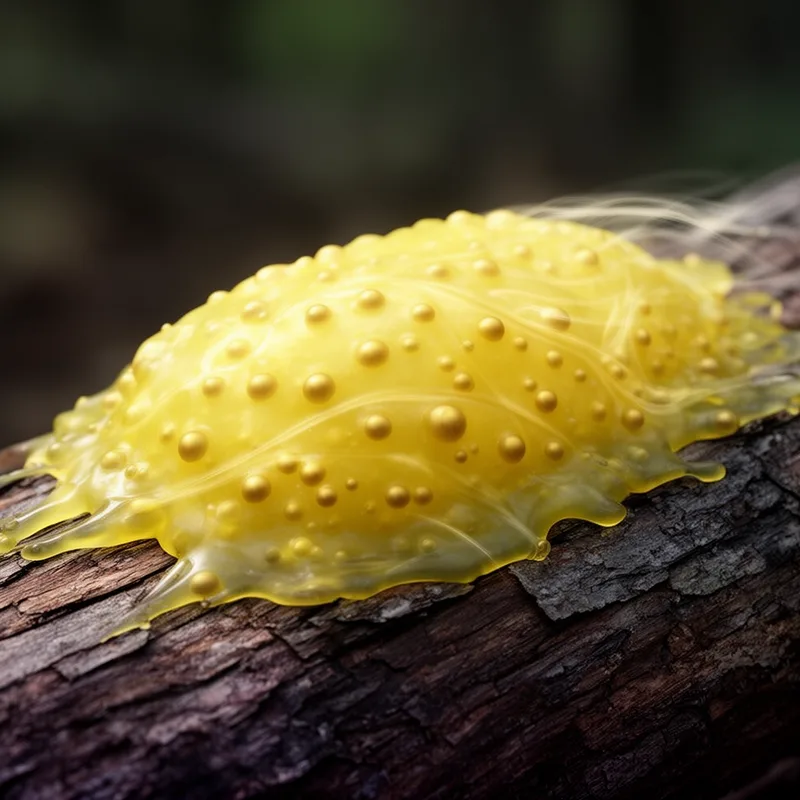
plasmodial slime mold
- noun
- /plæzˈmoʊdiəl slaɪm moʊld/
- Specialized
- The plasmodial slime mold moves by streaming its protoplasm across decaying wood.
Examples
-
A plasmodial slime mold can merge into a bright yellow mass during the plasmodium stage.
-
Scientists studied the unique feeding habits of the plasmodial slime mold under different laboratory conditions.
-
The plasmodial slime mold is fascinating to study.
-
Did you know that plasmodial slime molds can move toward food?
-
During its lifecycle, the plasmodial slime mold can form a colorful mass that helps it absorb nutrients.
-
Researchers discovered that the plasmodial slime mold exhibits unique movement patterns when searching for food.
-
In the forest, a plasmodial slime mold can grow large and hunt for microscopic organisms on decaying logs.
Synonyms

One large soft mass of living material that moves and is not divided into separate cells

A soft mass of many cells that moves like an amoeba and feeds on decaying plants

A soft slimy living thing like a fungus that grows in damp places
Surface Forms
Morphology
The phrase combines the adjective 'plasmodial' with the transparent compound 'slime mold', so in principle a learner who knows the parts could infer it refers to a particular kind of slime mold. However, 'plasmodial' is a technical, specialized term and the MWE's typical use to label bio-inspired computing models is a metaphorical extension of the biological sense, making full understanding unlikely for a B1 learner without prior exposure.
Etymology
Plasmodial slime mold gets its name from a stage called the 'plasmodium', when many single cells join into one bright, moving slime mass that flows over dead wood to feed. So the name helps you picture a single, moving blob rather than separate tiny organisms.

