
plasma
 277
6.3
277
6.3

- noun
- /ˈplæzmə/
- Specialized
- One possibility is to contain the reactants in plasma, the high-temperature form of matter.
- plasma physics
- interstellar plasma
- comet plasma
Loading YouTube…
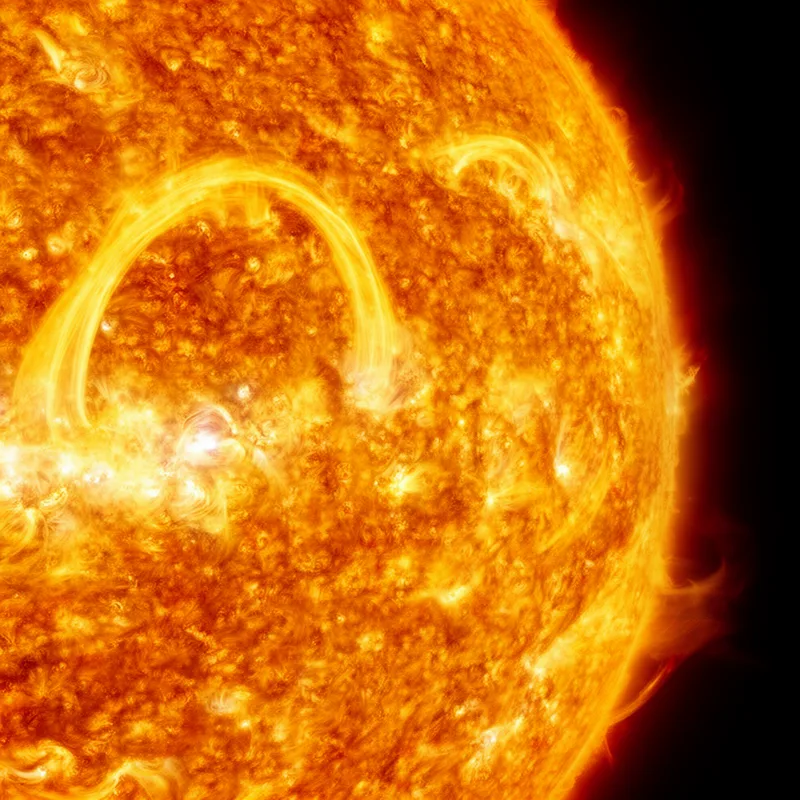
Watch on YouTubeThe sun is a giant plasma fusion reactor.
- The sun is a giant plasma fusion reactor.
- They were ionized in a plasma and so they were opaque.
- And so we need a stronger force to keep the plasma together to confine it.
- The stars are not just physical, distant, abstract balls of plasma or gas.
- That gives the plasma enough time to try to make fusion happen.
- OK, so that explains the thruster and the plasma.
- Even in a gas, there's still there's still bonds, but when you get to plasma, they completely break free.
Examples
-
So this is glowing hot plasma, a few million Kelvin.
-
OK, now we're going to stick the probe in the plasma, see what happens.
-
You have what looks like the plasma at the top, which is clear.
-
Well, the same kind of thing happens in a plasma flowing past the moon.
-
The sun is a giant plasma fusion reactor.
-
And so we need a stronger force to keep the plasma together to confine it.
-
In other properties, the plasma, far from the comet, appeared very much like the solar wind.
Academic text (1992) -
Inside this cage is the largest and most powerful plasma injector in the world.
-
Finally, instruments measured the magnetic field and plasma waves around the comet.
Academic text (1992) -
The sun is composed primarily of plasma, the hottest state of matter in the universe.
Compounds

- Specialized
2
3.5
The pale yellow liquid part of blood that holds blood cells and carries proteins and nutrients
- Specialized
1
4.5
A thin flexible layer around a cell that controls what enters and leaves it



- Specialized
A serious lung infection that inflames the tissue between air spaces, often in babies or people with weak immune systems


- Specialized
A protein in blood that helps it to clot and whose lack causes heavy bleeding
How Hot

Surface Forms
Etymology
Plasma takes its name from the same Greek root for 'something formed', and scientists used it for the hot, ionized gas because that glowing gas looks and behaves like a single 'formed' sea of particles that carries free electrons and ions, just as blood plasma carries cells, which is why the word fits this state of matter.