
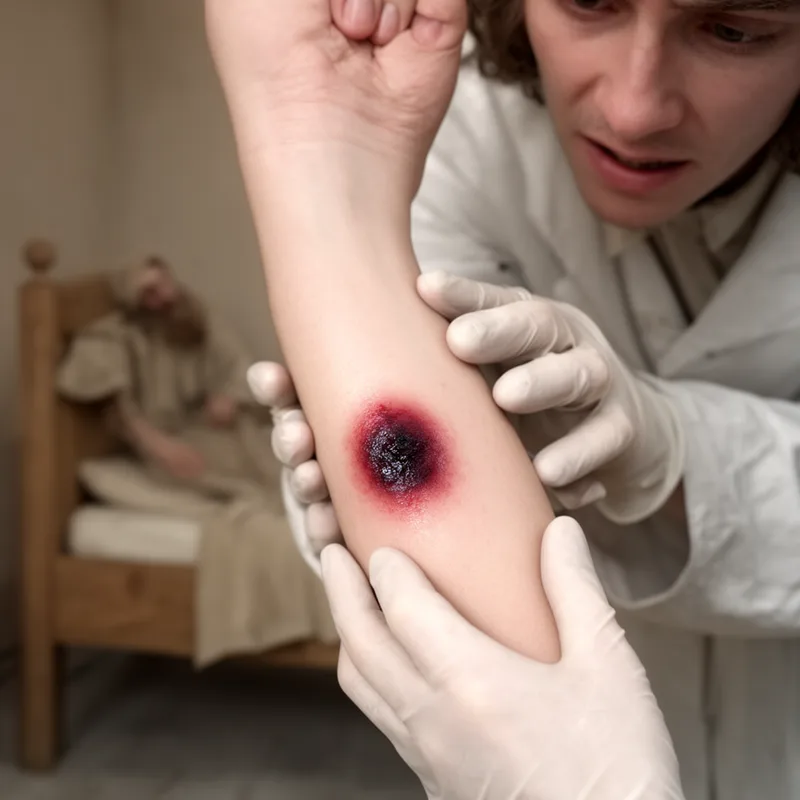
plague spot
- noun
- /pleɪɡ spɑt/
- Archaic
- The doctor examined the patient and confirmed the presence of a plague spot on his arm.
Examples
-
She noticed a plague spot on the victim's neck, a symptom that alarmed the medical team.
-
In historical accounts, the plague spot often appeared as dark marks on the skin during outbreaks.
-
Not so, Eugene Aram; murder is brought home to him by evidence... he has the plague spot on his body and soul, from which no ingenuity can free him." (4).
Academic text (2016)
Synonyms

 4
9.8
4
9.8

A small raised mark on the skin left after an illness like smallpox
 4
3.9
4
3.9
A large irregular spot on skin or another surface that is a different color
 3
7.7
3
7.7
A small scar-like pit on the skin left by disease such as smallpox or acne
Surface Forms
Morphology
Etymology
Plague spot The noun plague spot comes from medieval times when doctors noticed a dark, painful spot on the skin of people with the plague. That real spot was seen as a clear 'sign' of the disease and often of death, so the phrase means the dark skin mark that shows someone has the plague.