
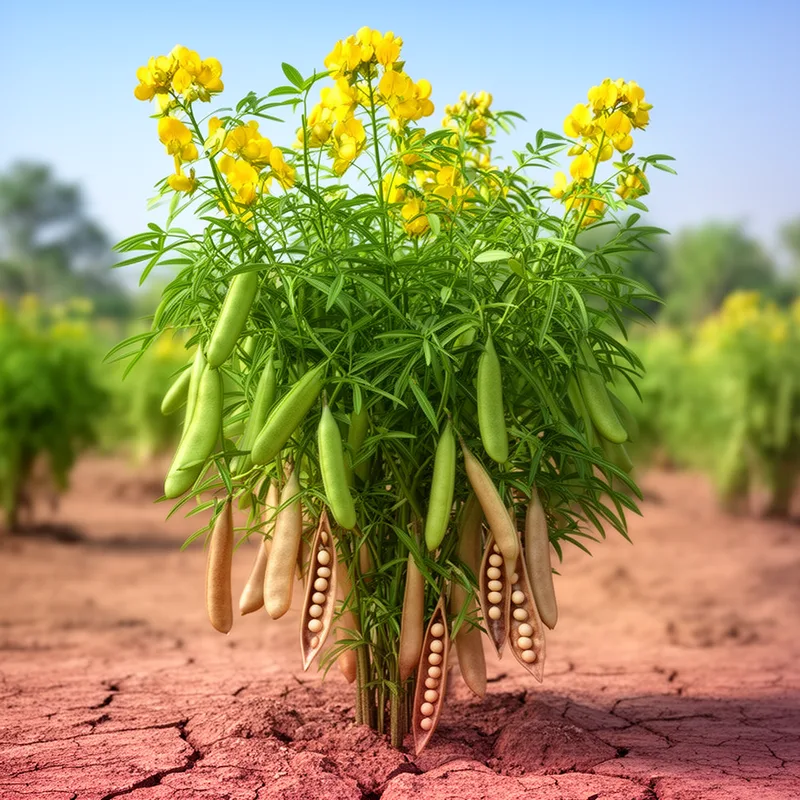
pigeon-pea plant
- noun
- Australian
- Farmers in India often cultivate pigeon-pea plant to improve soil fertility and provide a protein-rich crop.
Examples
-
The pigeon-pea plant produces vibrant yellow flowers before its pods develop.
-
Drought resistance makes the pigeon-pea plant valuable in regions with challenging growing conditions.
-
The pigeon-pea plant thrives in tropical climates.
-
Farmers often grow pigeon-pea plants for their nutritious seeds.
-
The pigeon-pea plant produces nutritious seeds that are an important source of protein in many countries.
-
In many tropical regions, the pigeon-pea plant is cultivated for its flat pods and edible seeds.
-
Gardeners appreciate the pigeon-pea plant for its attractive yellow flowers and ability to enhance soil health.
Synonyms


 1
8.9
1
8.9
A tropical plant with yellow flowers and flat pods grown for edible seeds
A tropical plant with hard stems and yellow flowers that has flat pods of edible seeds

A tropical plant with yellow flowers and flat pods that makes edible seeds like peas
A tropical shrub with yellow flowers that produces seeds eaten as food
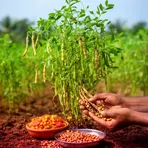
A tropical plant grown for its small edible seeds used like peas
Surface Forms
Morphology
pigeon-pea + plant
The noun is compositionally transparent: 'pigeon' + 'pea' + 'plant' signals a plant that produces pigeon peas, so a learner who knows the constituent words can infer it denotes a kind of pea plant. While the precise botanical details (a tropical woody shrub, Cajanus cajan) are specialized, the basic meaning is readily derivable from the parts.
Etymology
Pigeon-pea plant got its name from a simple picture: one popular story says wild pigeons ate the small pea seeds, so people called the shrub the 'pigeon pea'. That's why the name tells us it is a plant that makes pea-like seeds eaten by birds and people.