
phylum Pogonophora
- noun
- /ˈfaɪləm pəˈɡoʊnəˌfɔrə/
- Archaic
- Until recently, phylum Pogonophora was considered separate from annelids in biological classifications.
Examples
-
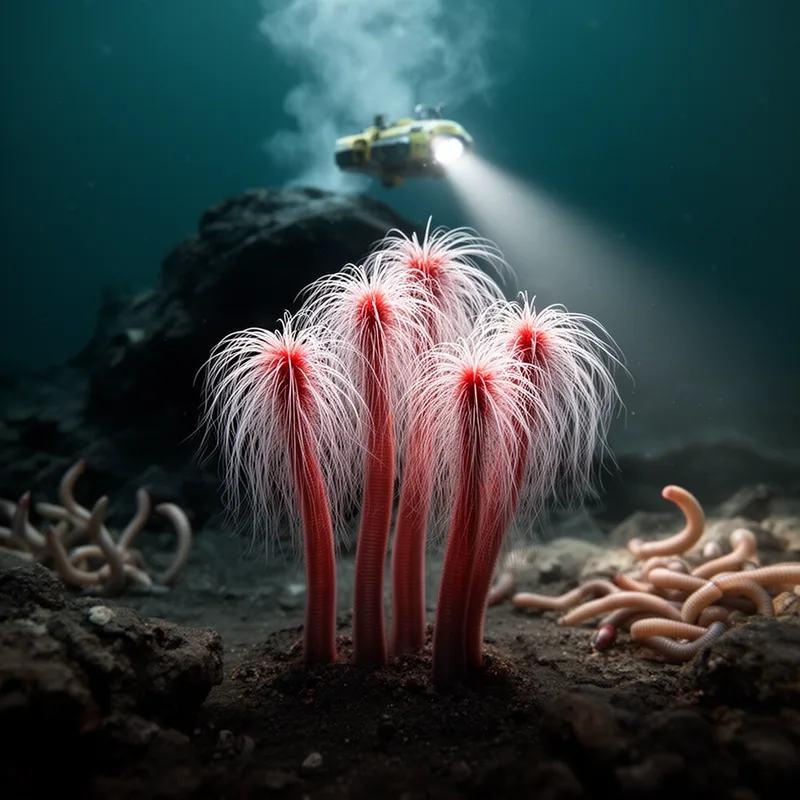
Scientists used deep-sea submersibles to collect specimens of phylum Pogonophora from hydrothermal vents.
-
Have you studied the phylum Pogonophora in your biology class?
-
The unique feeding method of phylum Pogonophora involves absorbing nutrients directly from seawater.
-
The phylum Pogonophora includes unique marine organisms.
-
Scientists used deep-sea submersibles to collect specimens of phylum Pogonophora from hydrothermal vents.
-
The unique feeding method of phylum Pogonophora involves absorbing nutrients directly from seawater.
-
Until recently, phylum Pogonophora was considered separate from annelids in biological classifications.
Synonyms

A long thin worm that lives in the deep ocean near hot vents
Surface Forms
Morphology
This is a straightforward taxonomic construction: 'phylum' (a biological rank) combined with the name 'Pogonophora' denotes the phylum to which those organisms belong. Such rank + name combinations are compositional and cross-linguistically regular, so a B1 learner who knows both words can infer it refers to the group of marine worms called Pogonophora.
Etymology
Phylum Pogonophora comes from Greek parts pogon and -phora, which mean 'beard' and 'bearer', because these sea worms have a tuft of feeding tentacles that look like a beard. That's why they are called 'beard worms' and were once seen as their own group, though today they are usually placed with other similar sea worms.

