

Pogonophora
- noun
- /ˌpɒɡəˈnɒfərə/
- Specialized
- Scientists study Pogonophora to understand life in extreme ocean environments.
Examples
-
The deep-sea vents are home to Pogonophora, remarkable worms that thrive without sunlight.
-
The Pogonophora are fascinating creatures that thrive in extreme conditions.
-
A colony of Pogonophora was discovered attached to the sea floor near hydrothermal vents.
-
Did you know that Pogonophora can live for many years without sunlight?
-
The Pogonophora are fascinating creatures that thrive in extreme deep-sea habitats.
-
Scientists discovered new Pogonophora species during their exploration of deep ocean vents.
-
Research has shown that Pogonophora play an important role in their ecosystems by filtering nutrients from the water.
Synonyms

A group of deep-sea worms with beard-like tentacles placed in a different worm family
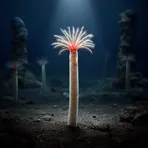
A thin sea worm with tentacles that lives in a tube on the deep ocean floor

A thin sea animal that lives in a tube on the deep ocean floor and has tentacles
Compounds
- Archaic
A group of deep-sea worms with beard-like tentacles placed in a different worm family
Surface Forms
Morphology
Pogonophora = pogon + phora
The term is formed from specialized Greek combining forms (not standalone English words) used in scientific nomenclature, so an average B1 learner cannot derive the meaning from its parts.
Etymology
Pogonophora comes from Greek parts pogon- meaning 'beard' and -phora meaning 'to carry', so it means 'beard-bearer'. These deep-sea worms are called beard worms because they have long, hair-like tentacles that look like a beard, which makes the name easy to remember.

