
photoperiodic


 1
8.2
- adjective
- /ˌfoʊtəʊˈpɪəriˌɒdɪk/
- Specialized
- Many animals are photoperiodic, regulating their reproductive cycles based on the amount of daylight they receive.
Examples
-
Farmers often choose photoperiodic crops that will flower at specific times of the year to maximize yield.
-
A. albopictus adults are photoperiodic and eggs resist freezing.
Academic text (1992) -
Photoperiodic organisms go into diapause at a precise day length, but this day length often varies systematically with latitude.
Academic text (1992) -
We have seen the transport of the temperate race across the Pacific, its rapid, human-aided spread in the United States, and the fine-tuning of its photoperiodic response to the climate of its new continent.
Academic text (1992) -
By watching the photoperiodic North American A. albopictus change into a nonphotoperiodic tropical mosquito, we will be witnessing a marvelous evolutionary transformation.
Academic text (1992) -
Even Asian populations as far south as Taiwan (220 north latitude) are partly photoperiodic, and this is the same latitude as Cuba.
Academic text (1992) -
Although the Brazilian populations are nonphotoperiodic, the rapidity with which temperate-zone populations lose their photoperiodic response under tropical conditions makes it possible that even these populations have temperate-zone ancestors.
Academic text (1992) -
The strain from Japan proved to be photoperiodic—eggs laid by the females exposed to long days hatched, while those laid by the females exposed to short days went into diapause.
Academic text (1992) -
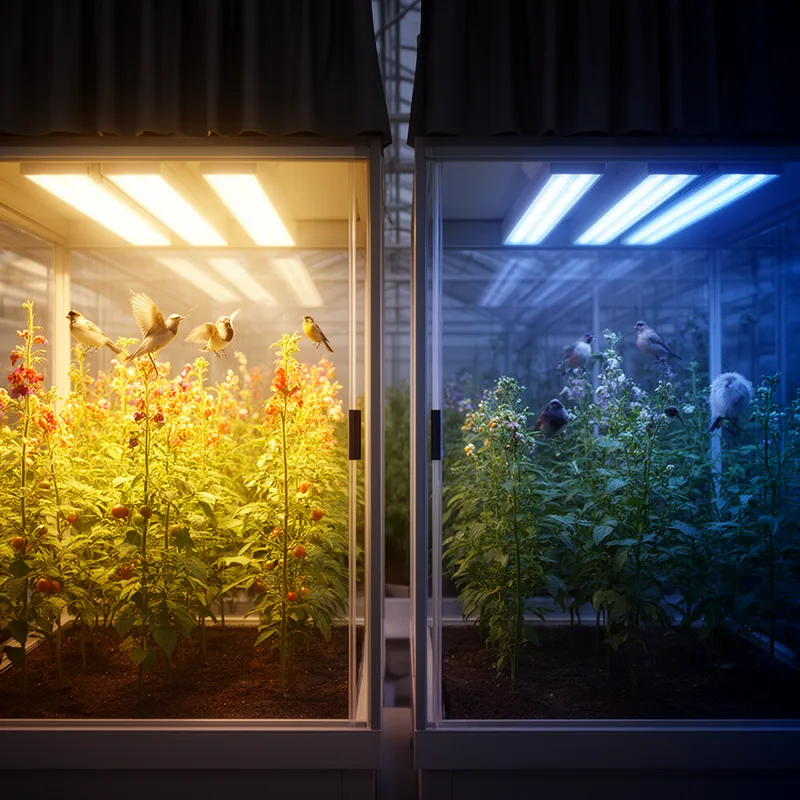
Plants that are photoperiodic bloom in response to the changing lengths of day and night throughout the seasons.
Surface Forms
Morphology
photoperiodic = photoperiod (transparent) = photo + period + ic
The adjective is regularly formed from the base noun 'photoperiod' with '-ic'.
Etymology
The word photoperiodic comes from Greek parts photo- meaning 'light', as in photograph, and period meaning 'time', like a school 'period'. So photoperiodic describes things, especially in plants and animals, that change because of how long the day or night is.