
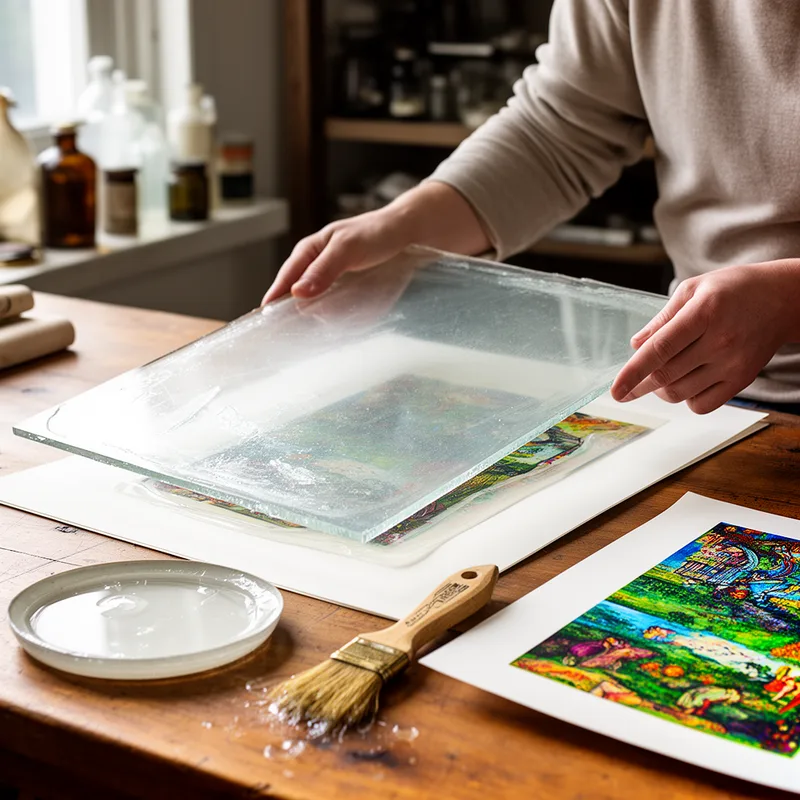
photogelatin process
- noun
- Archaic
- The early art books were illustrated using the photogelatin process to achieve rich tonal quality.
Examples
-
Color reproductions in the late nineteenth century often relied on the photogelatin process.
-
She studied the photogelatin process to better understand historic photo-printing techniques.
-
The photogelatin process is essential in modern printing.
-
Can you explain the photogelatin process to me?
-
In the late nineteenth century, artists used the photogelatin process to create vibrant color reproductions of their works.
-
Many historic publications featured images produced with the photogelatin process to enhance visual appeal and detail.
-
Photographers were fascinated by the photogelatin process, as it allowed them to reproduce images in multiple colors for prints.
Synonyms
A printing method that uses a glass plate covered in gelatin to make very detailed photos, sometimes in color
A high-quality photo print made from a glass plate coated with gelatin
A way of making photo prints with a gelatin plate or a print made the same way
Surface Forms
Morphology
photogelatin + process
The compound 'photogelatin' is not a common lexical item, but its constituents 'photo' (relating to light/photography) and 'gelatin' (a protein substance) are transparent, so a B1 learner who knows those words plus 'process' could plausibly infer this refers to a photographic/gelatin-based method. However, the exact technical sense (a specific photomechanical printing method using glass plates and image transfer) is specialized and not fully predictable from the parts, making the expression only partially transparent.
Etymology
Photogelatin process comes from how prints were made: a glass plate was covered with gelatin and put in light so the photo image became fixed in the gelatin. That treated plate was then used to 'transfer an image' onto paper, so the name now means a printing method using gelatin on glass to make pictures.

