
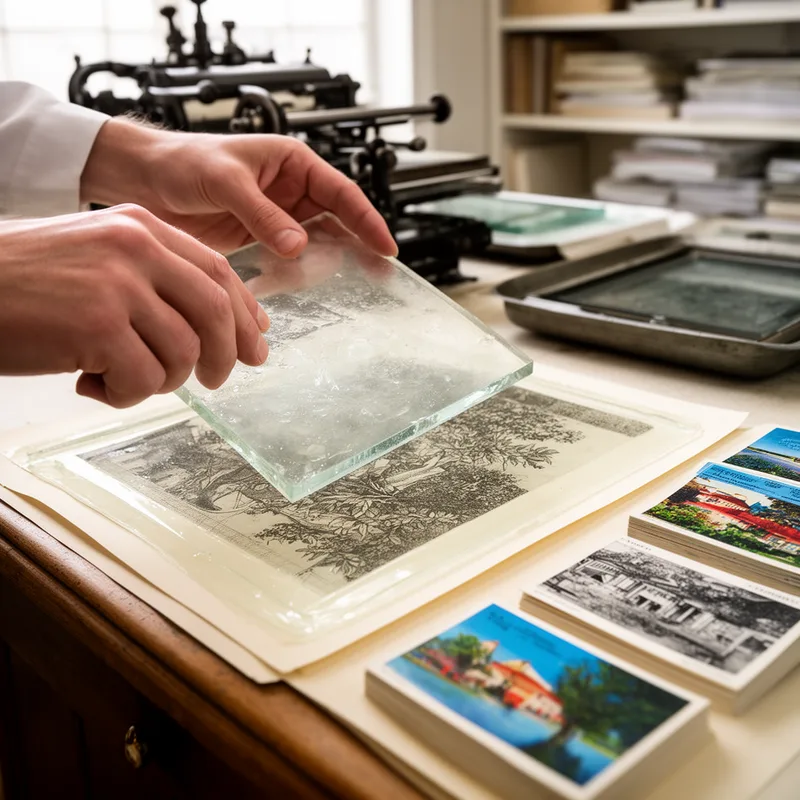
collotype printing
- noun
- /ˈkɒləˌtaɪp ˈprɪntɪŋ/
- Archaic
- Because of its ability to reproduce fine details, collotype printing was popular in art books.
Examples
-
They specialized in collotype printing for color postcards in the early twentieth century.
-
The museum's collection includes rare photographs produced by collotype printing.
-
The artist specializes in collotype printing.
-
Have you ever seen a collotype printing demonstration?
-
Due to its precision, collotype printing is often used for reproducing intricate artworks.
-
Many historical books feature illustrations created through collotype printing techniques.
-
In the early 1900s, collotype printing became widely recognized for its capability to produce vibrant images.
Synonyms
A high-quality photo print made from a glass plate coated with gelatin

A way to print pictures using a glass plate covered with gelatin to transfer the image
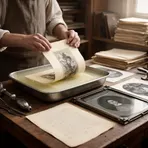
A way of making photo prints with a gelatin plate or a print made the same way
How High-Quality
- Archaic

- Archaic
- Archaic
 3
7.2
3
7.2

- Specialized
6
6.7
- Specialized

 1
4.9
1
4.9
Surface Forms
Morphology
The noun–noun compound is transparently compositional: it literally denotes the printing process that uses the collotype technique (collotype = a reproduction technique, printing = the process). Although technical, the meaning follows a regular modifier + head pattern, so a B1 learner who knows both constituents can infer the overall sense.
Etymology
Collotype printing comes from the gelatin, a kind of glue, spread on a glass plate to hold the picture for printing. That sticky layer could carry very fine detail and hold the ink, so collotype names the gluey plate and printing is the process that made clear photo prints.