
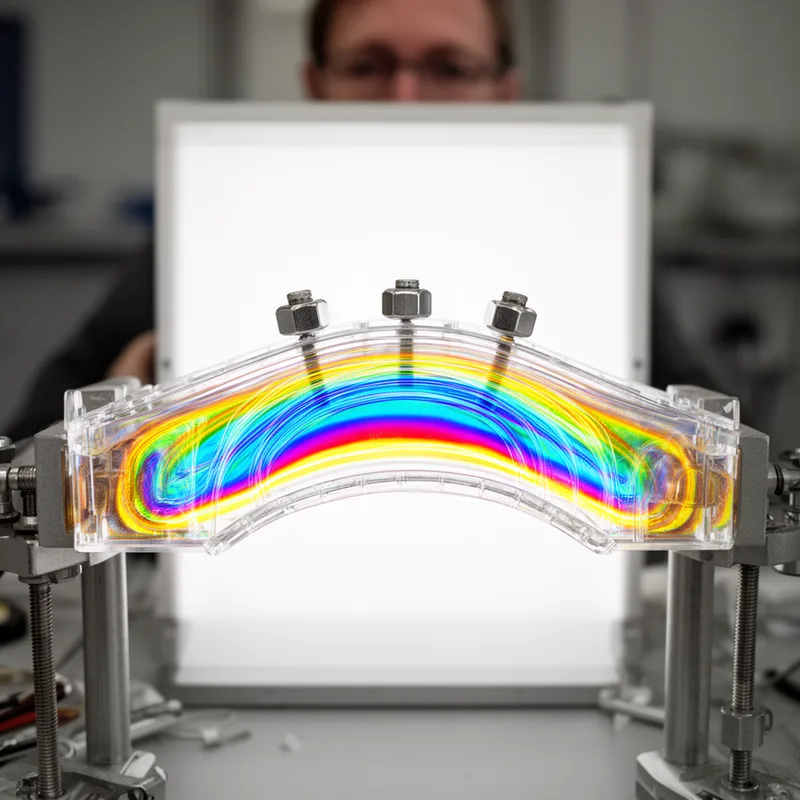
photoelasticity
- noun
- /ˌfoʊtoʊɪˈlæstɪsɪti/
- Specialized
- Engineers use photoelasticity to analyze stress patterns in mechanical components.
Examples
-
In her research, she applied photoelasticity to reveal the stress distribution in the bridge structure.
-
His current work in dynamic fracture includes the use of fiber-optical sensors, photoelasticity, and strain gauges in the study of the dynamic decohesion and failure of bimaterial interfaces and composites.
Academic text (1996) -
He has pioneered the use of dynamic photoelasticity in the study of dynamic deformation of granular media.
Academic text (1996) -
The scientist demonstrated photoelasticity to show how materials react under different loads.
Surface Forms
Morphology
photoelasticity = photoelastic (opaque) = photo + elastic + ity
The noun is formed regularly from the adjective 'photoelastic' with the suffix '-ity'.
Etymology
Photoelasticity comes from photo- meaning 'light', as in photograph, and elasticity meaning 'the ability to stretch', as in elastic. So photoelasticity is when a material changes how it lets light pass when it is under stress, and this lets engineers use light patterns to see where the material is stretched or weak.

