

photoconductive cell


 1
8.1
1
8.1
- noun
- /ˌfoʊtəkoʊnˈdʌktɪv sɛl/
- Specialized
- When exposed to sunlight, the resistance of the photoconductive cell drops significantly, triggering the control system.
Examples
-
The camera's light meter relies on a photoconductive cell to measure ambient light accurately.
-
A photoconductive cell converts light into electrical signals.
-
A photoconductive cell is often used in street lights to automatically turn them on at dusk.
-
Many photoconductive cells are used in solar panels.
-
The scientist placed the photoconductive cell in the light chamber to measure its response to different wavelengths.
-
In this experiment, the photoconductive cell demonstrated a significant change in resistance when exposed to sunlight.
-
To enhance the performance of the circuit, we replaced the regular sensor with a highly sensitive photoconductive cell.
Synonyms
 2
6.2
2
6.2
A device that senses light and makes an electric signal
 1
6.6
1
6.6
A small device that makes electricity when light hits it to show how bright the light is
 1
5.3
1
5.3
A device that uses light to notice when people or objects move
 1
9.4
1
9.4
A small glowing tube that shows signal strength on old radios
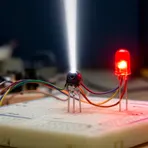 1
7.4
1
7.4
A small device that changes its electric signal when light falls on it
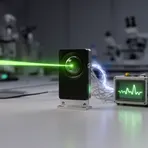 1
7.2
1
7.2
A device that senses light and makes an electric signal

A material or part that can carry electricity when light shines on it
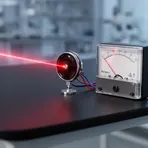
A device that makes a small electric signal when light hits it to detect or measure light

A part in a camera or machine that detects light and makes an electric signal
Surface Forms
Morphology
The compound directly combines 'photoconductive' (becomes more conductive when exposed to light) with 'cell' (an electrical unit), so its meaning — an electrical unit whose conductivity changes with light used to detect or convert light — is readily derivable from the parts. Although somewhat technical, the compositional structure is straightforward and follows familiar compounding/derivation patterns, so a B1 learner who knows the constituent meanings would understand it.
Etymology
Photoconductive cell comes from three parts: photo- meaning 'light', conductive meaning 'lets electricity flow', and cell meaning a small device. Imagine a tiny device that lets electricity flow more when 'light' hits it, so it is used to 'detect' and 'measure' light.