
phase change
 1
4.1
1
4.1

- noun
- /feɪz tʃeɪndʒ/
- Specialized
- When they cool sufficiently, they will go through a phase change.
- undergo a phase change
- phase changes in matter
- phase changes occur
Loading YouTube…
Watch on YouTubeAnd then the techniques fall apart and something appears and, and it's a phase change.
- And then the techniques fall apart and something appears and, and it's a phase change.
Examples
-
At the occurrence of each phase change, the atmosphere releases latent heat in the form of radiation.
Blog text (18) -
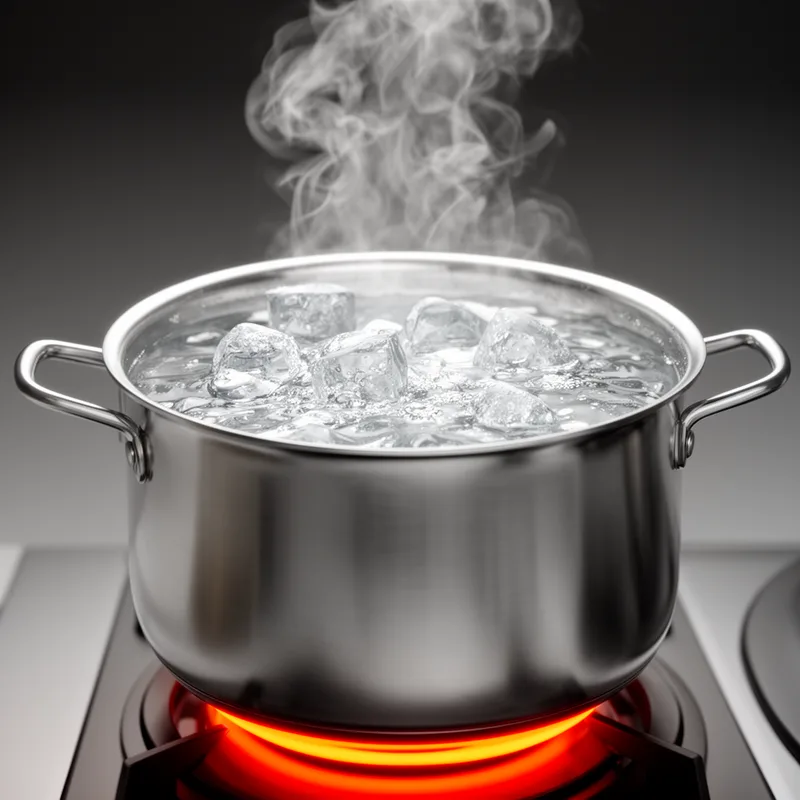
When ice melts in the sun, it experiences a phase change from solid to liquid.
-
More than likely, they had studied the structure of matter and its phase changes related specifically to the water cycle.
Academic text (1994) -
After the phase change, there was a noted change in level; however, there was no change in slope.
Academic text (2012) -
Because ice undergoes a phase change, it goes from a solid to a liquid.
-
Our third goal in this project was to seek new approaches to teaching the concept of phase change in water to university students who are nonscience majors.
Academic text (1994) -
I hid in the coffee room, numbly watching someone's brick of frozen lasagne undergo a phase change in the microwave oven.
Fiction book (1995) -
During the cooking process, water undergoes a phase change and transforms from liquid to vapor.
-
As temperatures drop, liquid water will eventually undergo a phase change and freeze into ice.
Synonyms
 4
3.4
4
3.4
A change where something changes state or appearance but stays the same substance
 1
5.5
1
5.5
A change when a material goes from one state to another without a chemical change, like ice melting

A process where matter moves between solid, liquid, and gas without a chemical reaction
Surface Forms
Morphology
The meaning 'a change from one physical state to another' is directly compositional from 'phase' (a distinct stage or state) plus 'change' (the act or state of becoming different). This straightforward noun–noun combination describes a change of state in a literal, cross-linguistically common way, so a B1 learner who knows both constituents will likely infer the MWE's meaning.
Etymology
Phase change comes from a clear image: a material moving from one visible phase or 'state' to another, like ice melting into water or water turning to steam. The word change simply means to move to a different one, so the phrase describes when a substance shifts its state without becoming a new substance.