
phantasy
- noun
- /ˈfæn.tə.si/
- Archaic
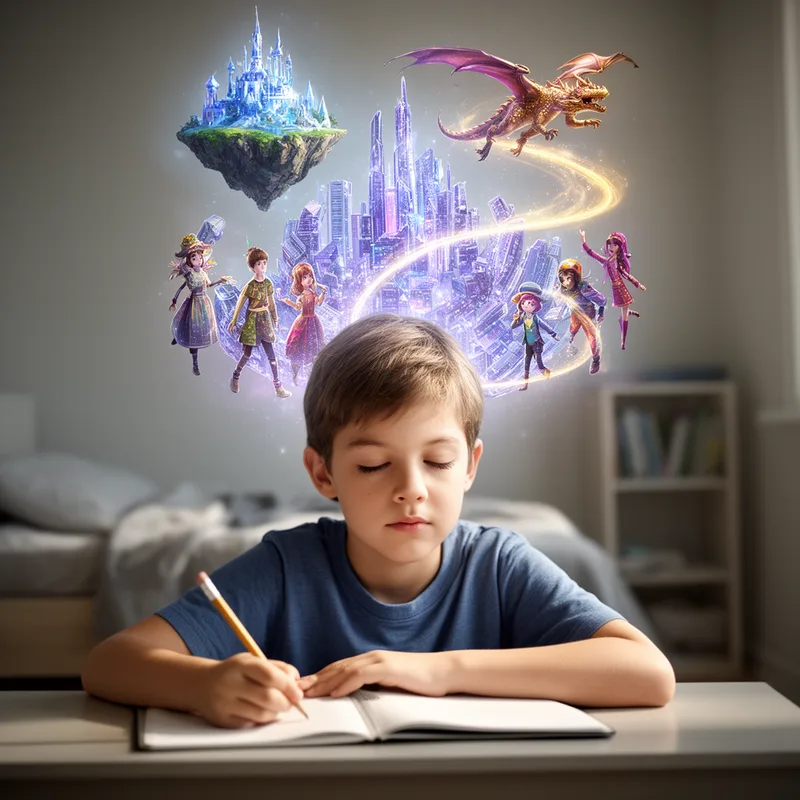
- Children often lose themselves in their phantasy world, creating adventures in their minds.
Examples
-
The novel explores the theme of phantasy as it contrasts with harsh realities.
-
Further, Easthope argues that poetry must be read as "social phantasy," and offers examples from the poetry of Milton, Dryden, Pope, Tennyson, Arnold, Eliot, and Pound.
Academic text (1993) -
"Phantasy emanates from within and imagines what is without."
Academic text (2007) -
(1) The significance of "play": toys or other objects bridge "the gap between an external object and the inner world," and in doing so they represent the object of phantasy.
Academic text (2007) -
Finally, there is the bias that intentionally impedes insight and its implications for "the outer drama of living," preferring instead to live "in the inner drama of phantasy." (n15)
Academic text (2002) -
Her phantasy of becoming an artist inspired her to paint every day.
Synonyms

 112
3.8
112
3.8

An imagined world or story someone creates in their mind
Antonyms

Compounds

How Imaginary

Surface Forms
Etymology
Phantasy comes from Greek phantasia, meaning 'image' or 'appearance', and it once meant the mind's power to make images. So phantasy today often means free, creative imagination or fanciful thinking.