
phagocytic
- adjective
- /ˌfæɡəˈsɪtɪk/
- Specialized
 :
fagocítico
:
fagocítico
- In laboratory studies, scientists have observed that phagocytic activity is essential for maintaining a healthy immune response.
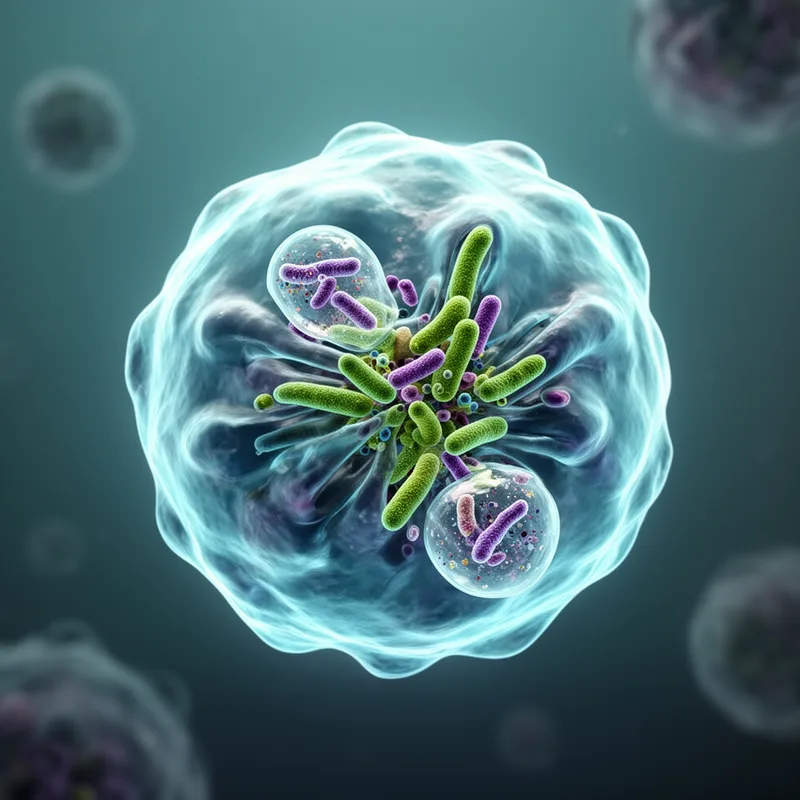
- phagocytic cells
Examples
-
M. tuberculosis DNA is situated not only in macrophages but also in other non-professional phagocytic cells.
Academic text (2000) -
Cigarette smoking, excessive inhalation of polluted air, and respiratory infections result in lung irritation and the migration of phagocytic cells to these areas of stress.
Academic text (2007) -
So a well known phagocytic cell is a macrophage and there you can see the term phagocyte.
-
In normal hosts, a phagocytic response to colonization prevents infection.
Academic text (2004) -
Moreover, we noted that reactive astrocytes produced an extensive proliferation of fibrous processes and that the microglia assumed a phagocytic role.
Academic text (2002) -
However, the results presented here indicate that in vivo, non-professional phagocytic cells located well away from the active lesions could provide important sanctuaries with minimal antigen-presenting ability.
Academic text (2000) -
In the present study, we found that administration of PCTR1 to vagotomized mice 16 hours prior to challenge at a dose as low as 75 ng/mouse restored the macrophage phenotype as well as phagocytic function.
Academic text (2016) -
PMNs are phagocytic cells that play a critical role in the host defense against bacterial and fungal infections, whereas eosinophils are primarily involved in the host defense against parasites and function in the pathogenesis of allergic and immunological disease.
Blog text (33) -
The immune system's phagocytic cells, like macrophages, work tirelessly to engulf and destroy harmful bacteria.
-
Phagocytic organisms play a crucial role in defending the body against infections by ingesting pathogens.
Surface Forms
Morphology
Etymology
The word phagocytic comes from the root phago- meaning 'eat' and the part -cyte meaning 'cell'. So a phagocytic cell is a cell that 'eats' particles like bacteria to help protect the body.

