
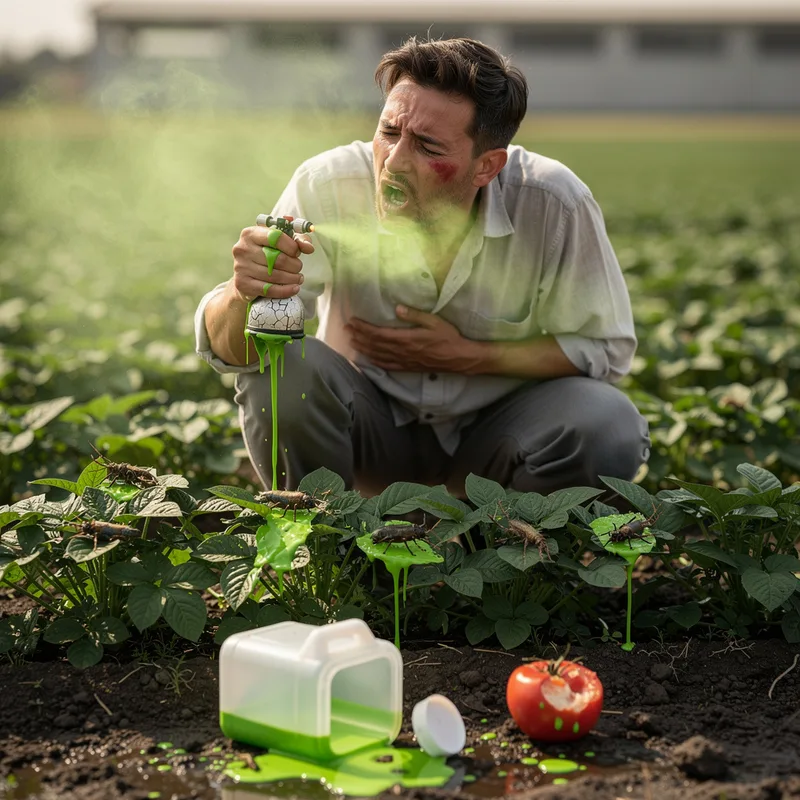
pesticide poisoning
 1
4.9
1
4.9

- noun
- /ˈpɛstɪˌsaɪd ˈpɔɪzənɪŋ/
- Specialized
- Based on the available data, estimates are that human pesticide poisonings and related illnesses in the United States total approximately $787 million each year (Table 1).
- human pesticide poisoning
- Pesticide poisoning may occur
Examples
-
In developing nations, as many as 3.5 to five million acute pesticide poisonings may occur each year, with millions more exposed to lower but still dangerous exposures.
Academic text (1998) -
A recent World Health Organization and United Nations Environmental Programme report (WHO/UNEP 1989) estimated there are 1 million human pesticide poisonings each year in the world, with approximately 20,000 deaths.
Academic text (1992) -
Today, up to 5 million people suffer pesticide poisoning every year.
Blog text (20) -
Human pesticide poisonings and illnesses are clearly the highest price paid for pesticide use.
Academic text (1992) -
Many animal pesticide poisonings that occur in the home and on farms go undiagnosed and are attributed to other factors.
Academic text (1992) -
In the United States, nonfatal pesticide poisonings reported by the American Association of Poison Control Centers total approximately 67,000 each year (Litovitz et al. 1990).
Academic text (1992) -
Of 25,000 calls made to the Illinois Animal Poison Control Center in 1987, nearly 40% concerned pesticide poisonings in dogs and cats (Beasley and Trammel 1989).
Academic text (1992) -
Every year, thousands of agricultural workers experience pesticide poisoning from handling chemicals.
-
Flu-like symptoms such as headaches and nausea can indicate pesticide poisoning after exposure to harmful sprays.
-
Prompt medical attention is crucial for anyone suffering from pesticide poisoning to prevent severe health issues.
Synonyms
 27
4.4
27
4.4
Giving a dangerous substance to a person or animal with the aim of hurting them

A serious illness from breathing or swallowing the insect poison parathion that causes stomach pain, headache, seizures, and heavy sweating

Sickness caused by breathing in or swallowing the insect spray malathion that causes nausea and weakness

Serious injury from swallowing or touching paraquat that slowly damages the mouth, throat, liver, and kidneys
Antonyms


Surface Forms
Morphology
The meaning 'a harmful condition caused by a pesticide' is directly and compositionally derived from 'pesticide' (a chemical for controlling pests) plus 'poisoning' (a harmful condition from a toxic substance). This noun+noun construction signalling the source/cause is transparent and common across languages, so a B1 learner who knows both constituents can readily infer the MWE meaning.
Etymology
Pesticide poisoning comes from the simple image of farm chemicals: a pesticide is a substance used to kill pests, and poisoning is when something makes a person very sick. So, pesticide poisoning means 'getting sick after eating, breathing, or touching pesticides'.