
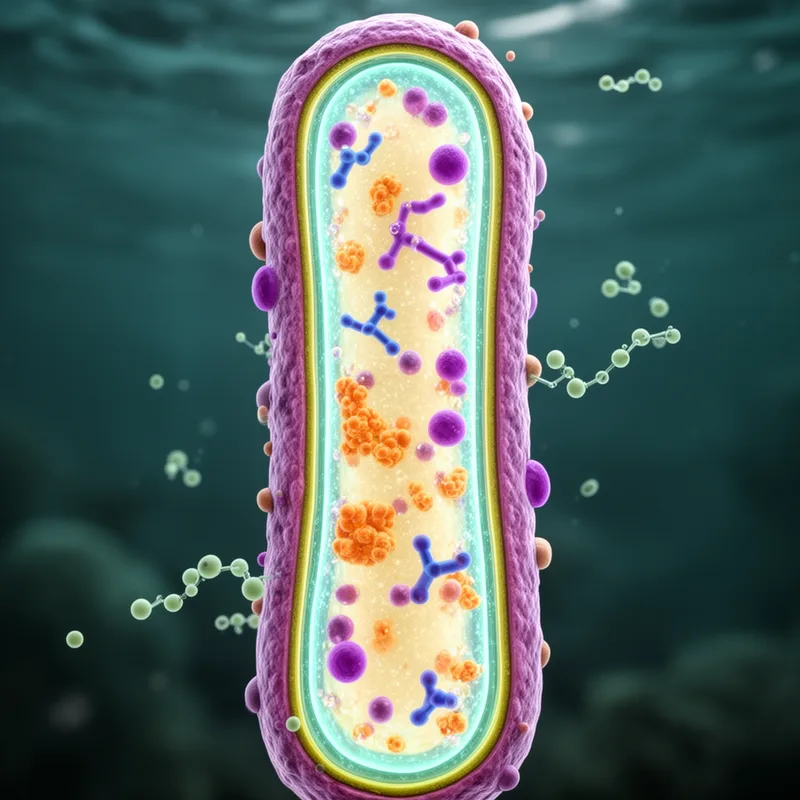
periplasm


 1
9.9
- noun
- /ˈpɛrəˌplæzəm/
- Specialized
- The predator cell invades and grows within a specific compartment found in Gram-negative cells, the periplasm.
Loading YouTube…
Watch on YouTubeAnd then you go into the periplasm or the ER, which is where you find proteins that have more disulfide bonds.
- And then you go into the periplasm or the ER, which is where you find proteins that have more disulfide bonds.
Examples
-
The enzymes located in the periplasm play a crucial role in breaking down nutrients for the bacteria.
-
And then you go into the periplasm or the ER, which is where you find proteins that have more disulfide bonds.
-
So we're going to be talking about periplasm and you have cytosol.
-
During the research, we discovered important proteins in the periplasm of the bacterial cells.
-
The structure of the periplasm is essential for the function of Gram-negative bacteria.
Surface Forms
Morphology
Etymology
Periplasm comes from the Greek parts peri- meaning 'around' and plasm meaning 'something formed or shaped', the same root you see in plasma and cytoplasm. So periplasm is the 'formed' area around the cell, which is the space between a bacterium's inner and outer membranes that holds enzymes and proteins.