
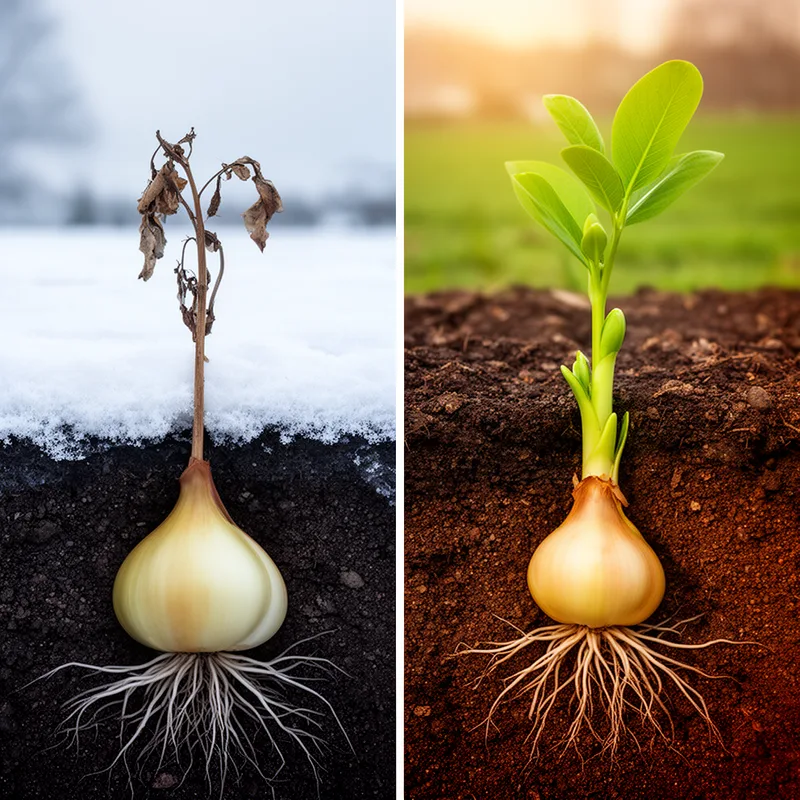
to perennate
- verb
- /pəˈrɛnˌeɪt/
- Specialized
- After a harsh winter, only the bulbs that perennated successfully will produce new shoots.
Examples
-
Certain cacti can perennate during drought by storing water in their tissues.
-
The tulips perennate through the winter.
-
Some herbaceous plants perennate by means of underground rhizomes.
-
Many plants perennate by storing energy in their roots.
-
To ensure that the flowers will perennate each year, it's important to plant them in a well-drained area.
-
Many farmers prefer to cultivate crops that perennate, as they require less maintenance over time.
-
In colder climates, certain vegetables can perennate if protected by mulch during the winter.
How Long-Lived


Surface Forms
Morphology
Etymology
The word perennate comes from the Latin perennis, made of per- 'through' and annus 'year', and is the same root as perennial. So to perennate is for a plant to 'last through the year' and survive from one growing season to the next.