

to pay off
 24
5.0
24
5.0

- phrasal verb
- /peɪ ɔf/
- I had to pay off a lot of cops to stay out of prison.
- pay off officials
Loading YouTube…
Watch on YouTubeCIA intelligence analysts being paid off to do political favors.
- CIA intelligence analysts being paid off to do political favors.
- You know, he knew the most important people and paid off the most important people.
- And it just sort of just, you know, paid off politicians versus sort of the working man.
- I, I fully believed that he was gone for so long because it was like, oh, no, he paid off the cops.
- That sweet girl who's getting parents are getting paid off.
Examples
-
He paid off those cops to retrieve the loot and pin it on Fish.
-
Who'd you have to pay off to get this table?" Harry asked, sliding onto the stool opposite hers.
Fiction book (1995) -
I, I fully believed that he was gone for so long because it was like, oh, no, he paid off the cops.
-
You know, he knew the most important people and paid off the most important people.
-
Unless an FDA inspector was paid off to look the other way.
Blog text (18) -
Colonel Shadow paid off the local precinct house for a very specific reason.
Fiction book (1993) -
The businessman tried to pay off the officials to get the contract approved.
-
She was accused of paying off the inspector to overlook safety violations.
-
He managed to pay off the jurors to influence the outcome of the trial.
Synonyms
 507
8.9
507
8.9
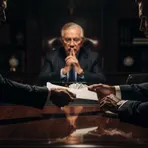
To pay someone illegally to influence their actions
 16
6.8
16
6.8
Give money or gifts to someone so they stay quiet and do something wrong
Antonyms

How Dishonest

Surface Forms
Morphology
The sense 'to take revenge' cannot be straightforwardly derived from 'pay' (transfer money) combined with 'off' (here noted as a slang verb 'to murder' or otherwise a particle). The relation is idiomatic and relies on pragmatic or slang usage rather than regular compositional rules, so a B1 learner who knows the constituents would unlikely infer this meaning.
Etymology
Pay off meaning 'to bribe' comes from secretly giving money to make someone act for you: you pay them off to influence their choice, usually dishonestly, so it means 'to give someone money to influence their actions'.