
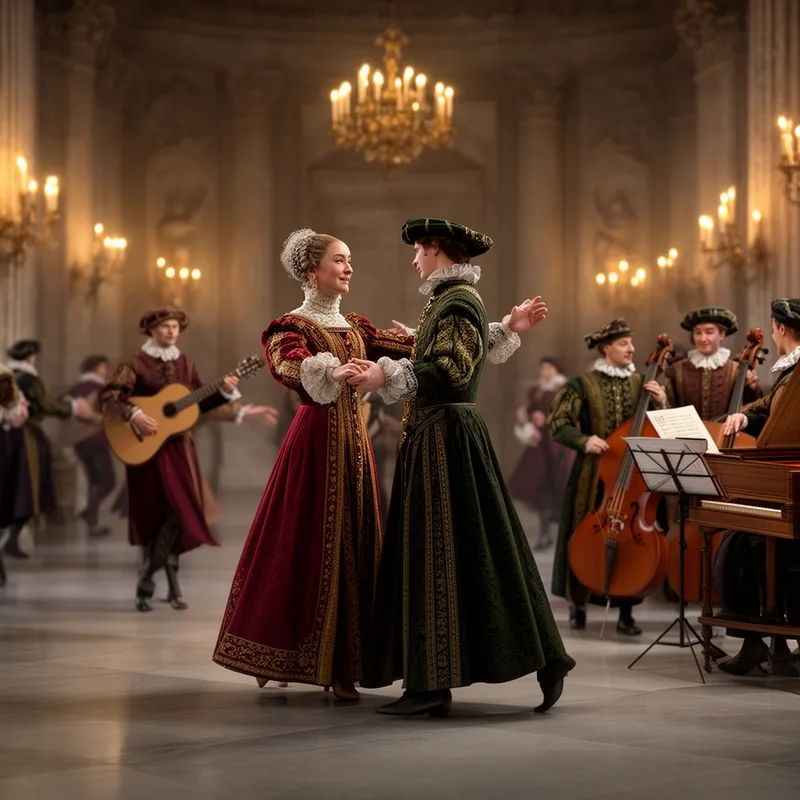
pavan
- noun
- /ˈpævən/
- Archaic
- The orchestra performed a beautifully haunting pavan by a sixteenth-century composer.
Examples
-
The elegant steps of the pavane were matched by the somber melody of the pavan.
-
Composers of the Renaissance often wrote a pavan to accompany social dances.
-
The pavan is beautiful.
-
What a lovely pavan!
-
The orchestra performed a beautifully haunting pavan by a sixteenth-century composer.
-
Composers of the Renaissance often wrote a pavan to accompany social dances.
-
The elegant steps of the pavane were matched by the somber melody of the pavan.
Synonyms



 1
9.9
1
9.9
A slow, formal dance from Europe in the 1500s and 1600s, or music written for it
 1
9.9
1
9.9
A slow formal dance in three beats or the music for that dance
 1
9.9
1
9.9
A slow, formal dance or musical piece in triple time from the Baroque period
 1
9.9
1
9.9
A slow formal piece of music that repeats a low musical line while other parts change

A slow formal Spanish dance in triple time used in baroque music
How Stately
- Archaic
 4
9.0
4
9.0
Surface Forms
Etymology
The word pavan comes from the old word pavo ('peacock') and from the dance name pavana, and music called a pavan was written to match that slow, proud dance. So a pavan as a musical piece is slow and dignified, like music for a peacock's walk.