
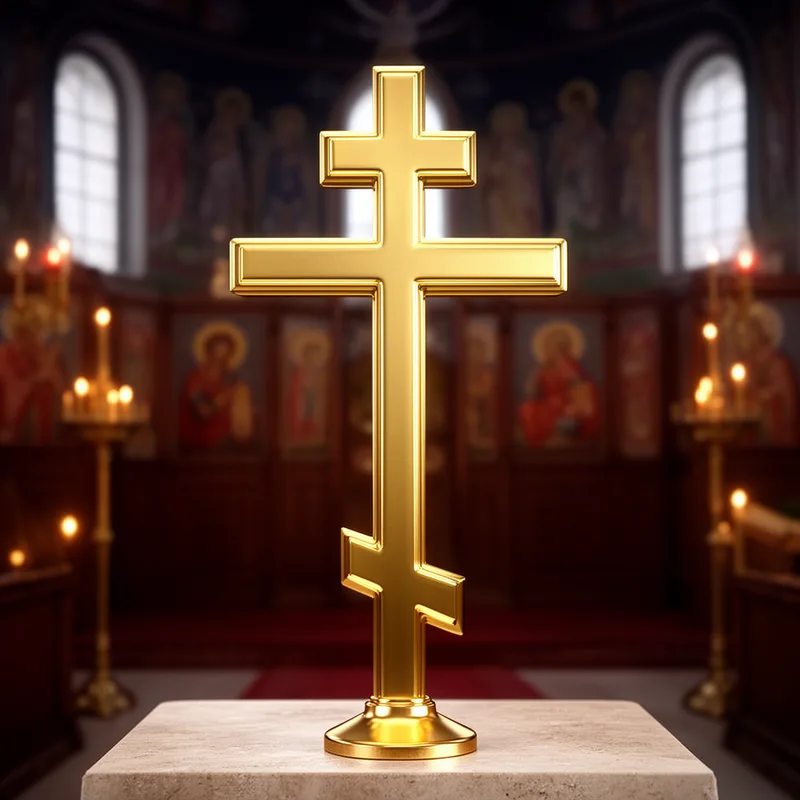
patriarchal cross
- noun
- Literature
- He studied the meaning behind the double bars of the patriarchal cross for his art project.
Examples
-
The patriarchal cross is a prominent symbol in many Eastern Orthodox churches.
-
The flag featured a large, golden patriarchal cross at its center.
-
The patriarchal cross symbolizes the authority of the church.
-
Many Eastern Orthodox churches display the patriarchal cross prominently.
-
The patriarchal cross is a prominent symbol in many Eastern Orthodox churches.
-
Many Eastern Orthodox churches display the patriarchal cross prominently.
-
The flag featured a large, golden patriarchal cross at its center.
Synonyms
A cross with two bars, the lower bar longer than the upper, used as a symbol of Lorraine

A cross with two horizontal bars, the upper shorter, that people use as a symbol of Lorraine and resistance
Surface Forms
Morphology
The compound is partially compositional: knowing 'patriarchal' (relating to a patriarch) and 'cross' (a type of cross) lets a learner infer it is a cross associated with a patriarch or church authority. However, the specific structural detail (two horizontal crossbars, one shorter) and the ecclesiastical sense are not predictable from the constituents, and 'patriarchal' may be misread as 'male-dominated', so the meaning is only partly transparent to a B1 learner.
Etymology
Patriarchal cross names a cross with two horizontal crossbars, the upper one shorter than the lower. One popular story says the extra, smaller bar marked higher 'rank' or 'authority' for a church leader called a 'patriarch', so the design became a lasting symbol of Eastern Christian leaders.

