
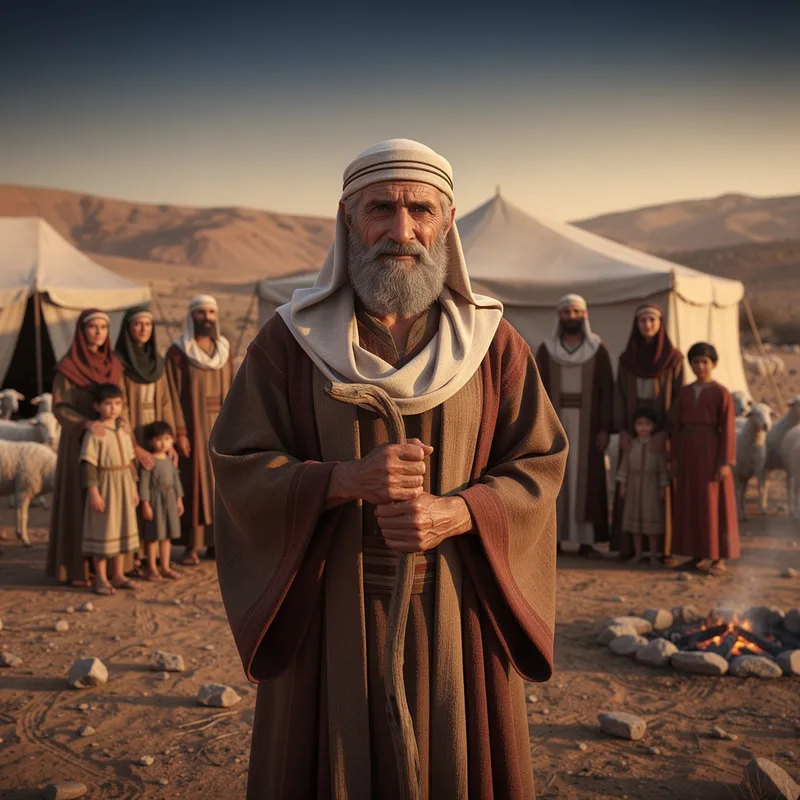
patriarch
 5
7.7
5
7.7

- noun
- /ˈpeɪtriˌɑrk/
- Literature
- The Torah traces the Israelites to the patriarch Jacob, grandson of Abraham, who was later renamed Israel.
- patriarch Abraham
- holy patriarchs
Loading YouTube…
Watch on YouTubeThe landscape is littered with remnants of ancient Hebrews, from the remains of the Second Temple's exterior wall to the tombs of the matriarchs and patriarchs.
- The landscape is littered with remnants of ancient Hebrews, from the remains of the Second Temple's exterior wall to the tombs of the matriarchs and patriarchs.
- I mean, a lot of the patriarchs chicks were barren.
Examples
-
To this list, one must add the virtue of the Old Testament patriarchs.
Academic text (2006) -
The promise of the land to the patriarchs is the leitmotif in the Five Books of Moses.
Academic text (1995) -
And since Abraham and the other patriarchs were holy, their children will also be holy.
Blog text (32) -
But in Paul's time, Abraham was known as the patriarch of the Jews only.
Academic text (2000) -
Mark well that in the Catholic Mass, Abraham is our Patriarch and forefather.
Academic text (1995) -
He says I appeared to Abraham, Isaac, and Jacob, the patriarchs before you as El Shaddai, but I did not make myself known to them by my name, Yahweh.
-
Abraham, Isaac, and Jacob are revered as the founding patriarchs of the Hebrew people.
-
In Judeo-Christian tradition, a patriarch is often seen as a significant male ancestor, like Abraham.
-
The Bible mentions several patriarchs who played a crucial role in the history of the Jewish faith.
Compounds

Surface Forms
Etymology
Patriarch comes from the Greek pater 'father' and arch 'ruler', literally a 'father-chief'. That's why the Bible uses patriarch for the early founding fathers like Abraham and Isaac, the first leaders of a people.