
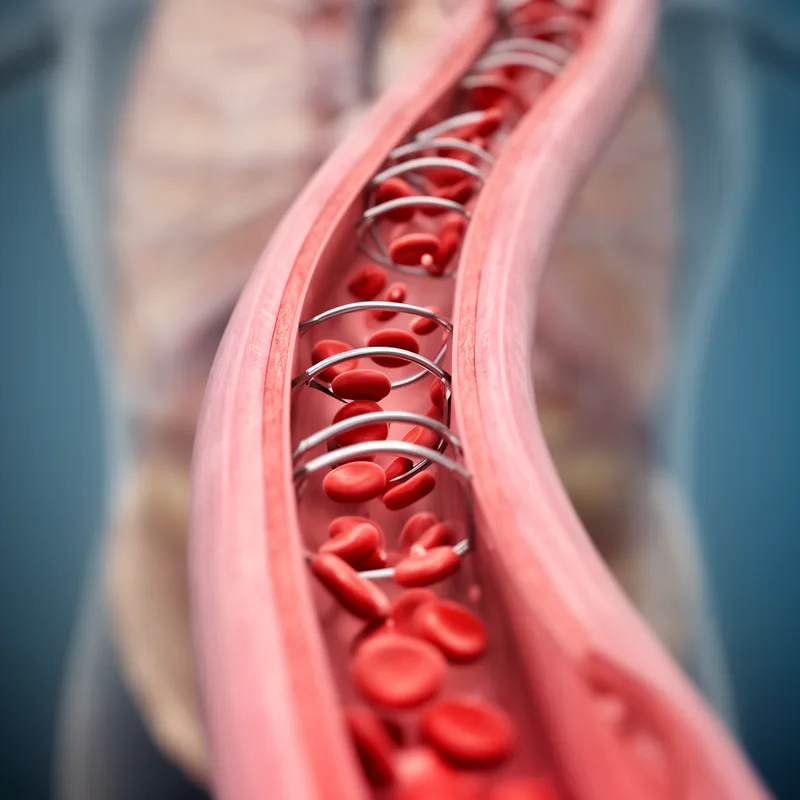
patency


 1
9.7
1
9.7
- noun
- /ˈpeɪtənsɪ/
- Specialized
- The patency of the microvascular anastomosis is paramount for flap survival in microsurgery (1).
- stent patency
- nasal patency
- airway patency
Examples
-
Between 3 and 14 months postoperatively, the patency of the ear canal was assessed visually and hearing was evaluated audiometrically.
Academic text (2005) -
Congenital webs limit airway patency and vocal fold abduction.
Academic text (2009) -
Restoration of nasal patency is a complex undertaking.
Academic text (2002) -
Postoperatively, airway patency was increased (figure B), and the patient experienced an immediate improvement in voice quality.
Academic text (2009) -
Overall, improvement in nasal patency following surgery was reported by 18 of the 19 patients (94.7%).
Academic text (2002) -
Various clinical trials have shown that early restoration of coronary patency improves survival. 10-13
Academic text (2000) -
The preoperative surgical planning included an ulnar artery patency test (Allen test).
Academic text (2010) -
In men with obstructive azoospermia, surgical correction of epididymal blockage is likely to restore patency of the duct and improve fertility.
Academic text (2015) -
The doctor examined the patient's nasal passages to ensure their patency after the surgery.
-
Restoration of patency in the airway was crucial for the patient's recovery following the operation.
Synonyms
 5
2.9
5
2.9
A wide area that allows a clear view and easy movement
Antonyms

How Open

Surface Forms
Morphology
Etymology
Patency comes from the Latin verb patere, which means 'to be open'. It is the same root as patent, so in medicine patency means a tube or blood vessel is 'open' and not blocked.