
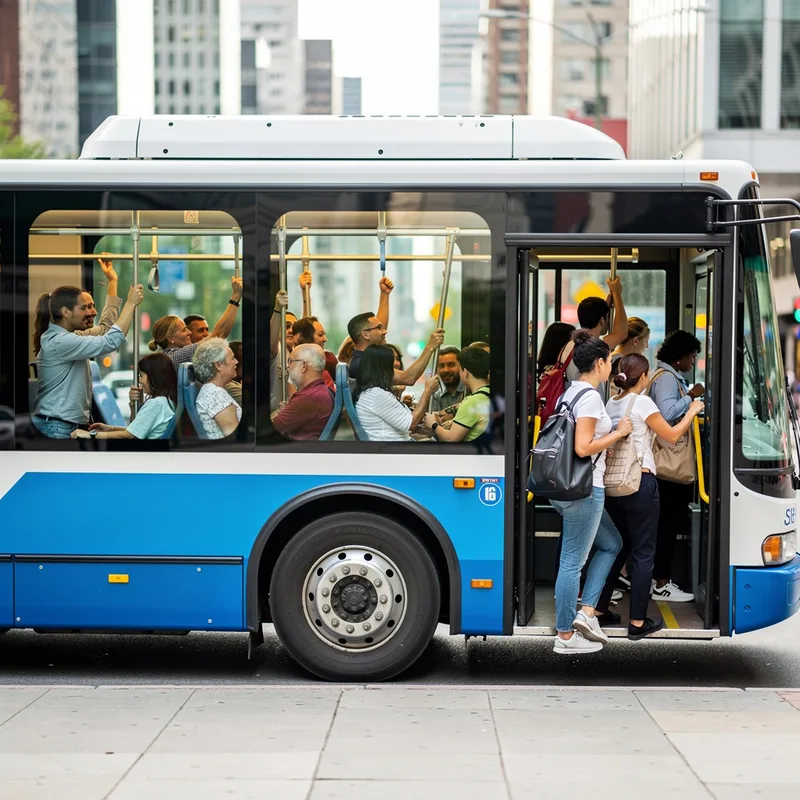
passenger vehicle
 3
2.5
3
2.5

- noun
- /ˈpæsɪndʒər ˈviːɪkl/
- The latest model of the passenger vehicle features advanced safety technology and fuel efficiency.
- passenger vehicles sold
Examples
-
The average weight of passenger vehicles has increased 26 percent since 1980, while their horsepower has risen by 107 percent.
Blog text (8) -
The biggest passenger vehicle generally encountered, the H1 Hummer, weighs just over 10,000 pounds.
Blog text (24) -
Tire-pressure monitoring systems have been available on select passenger vehicles since the late 1990s.
Academic text (2005) -
Most passenger vehicles on American roads typically weigh between 3,000 and 4,500 pounds.
Blog text (24) -
Unfortunately, CAFE policy and the growth of SUVs have combined to produce a fleet of passenger vehicles with unusually great size diversity.
Academic text (2003) -
Air quality enforcement that depends on emissions testing and vehicle registration is vastly more complicated with off-road equipment than with passenger vehicles.
Academic text (2005) -
USA Today calculated that size and weight reductions of passenger vehicles required to meet current fuel efficiency standards resulted in more than 46,000 deaths.
Blog text (11) -
From model years 1978 to 1985, Congress raised fuel economy standards for passenger vehicles from 15.3 mpg to 25 mpg.
Blog text (20) -
The number of drivers of 0-3-year-old passenger vehicles involved in fatal frontal crashes has fallen 55 percent since 2001.
Blog text (8) -
The city introduced a new fleet of passenger vehicles to improve public transportation.
Synonyms
 ∞
1.0
∞
1.0
A large vehicle that carries many people along a set route
 75
1.3
75
1.3
A large comfortable vehicle like a bus or long train carriage
 15
3.0
15
3.0
A part of a train that carries passengers
 9
2.6
9
2.6
A part of a train that carries people
 8
1.5
8
1.5
A train that carries people, not goods
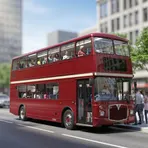 5
3.4
5
3.4
A bus or vehicle with two levels for passengers, one above the other
 3
2.2
3
2.2
A large ship that carries people, not cargo
 3
9.9
3
9.9
A small bus or car that carries people for a low price and stops where needed
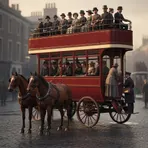 1
9.9
1
9.9
A large vehicle that carries many people, used for public transport in the past
 1
3.9
1
3.9
A large comfortable bus that carries many people on long journeys


 1
2.9
1
2.9
A large vehicle that carries many people on a set route
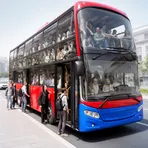
A large vehicle that carries many people on roads as public transport

A large old bus with seats in rows used for group day trips
How Big

Surface Forms
Morphology
The noun phrase 'passenger vehicle' is directly and compositionally built from 'passenger' (a person traveling) and 'vehicle' (a machine that moves people), so its meaning 'a vehicle for carrying passengers' is immediately derivable from the parts. This noun+noun compounding is a common, cross-linguistic pattern and therefore an average B1 learner who knows both constituents will understand the expression.
Etymology
The compound passenger vehicle comes from the simple idea of passenger meaning 'a person who travels' and vehicle meaning 'a thing that moves'. So today it means a car, bus, or train made to carry people rather than goods.