
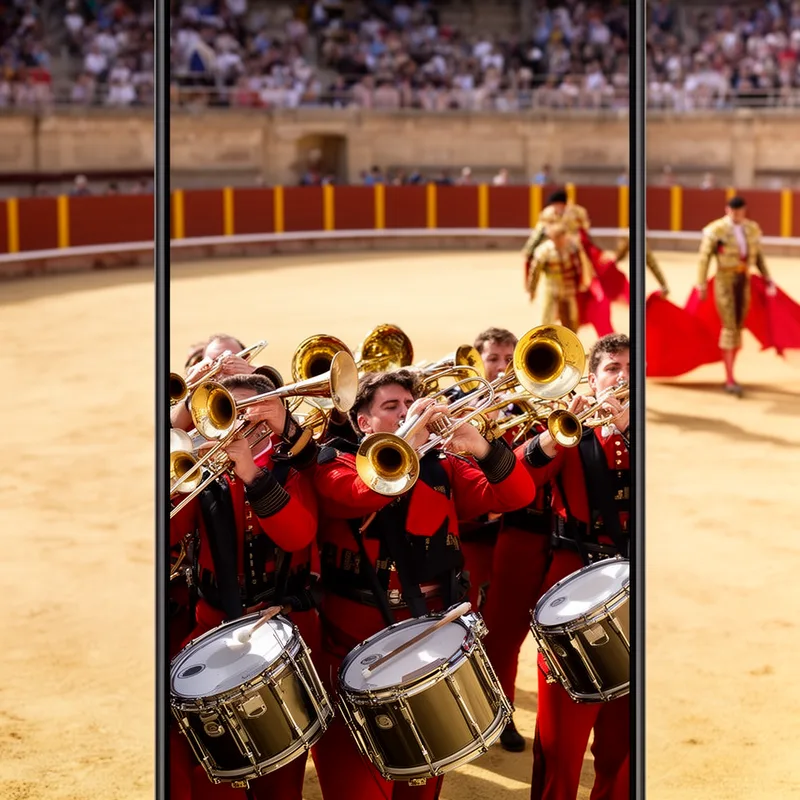
paso doble
 1
8.2

- noun
- /ˈpɑːsoʊ ˈdoʊbleɪ/
- The orchestra played a traditional paso doble as the matadors entered the arena.
Examples
-
The band played a lively paso doble at the festival.
-
The paso doble is often performed during bullfights.
-
Every year, the festival opens with a lively paso doble played by the town band.
-
The dramatic rhythm of a paso doble energizes the dancers' performance.
-
The orchestra played a traditional paso doble as the matadors entered the arena.
-
Every year, the festival opens with a lively paso doble played by the town band.
-
The dramatic rhythm of a paso doble energizes the dancers' performance.
Synonyms
 15
1.4
Music with a strong beat that people dance to at parties
Surface Forms
Morphology
paso + doble
If a learner knew the constituents as Spanish 'paso' (step) and 'doble' (double) they could plausibly infer something like a 'double step' and therefore guess it names a dance, but the full, culturally specific meaning (a fast Spanish ballroom dance evoking a bullfight) is not fully predictable from the parts. As a loaned proper name for a particular dance the term is partly compositional but requires prior exposure to recover the exact sense and connotations.
Etymology
Paso doble comes from Spanish and literally uses paso 'step' and doble 'double'. One popular story says it began as a short marching tune played when matadors walked into the bullring, and that lively march is why a paso doble is a fast, dramatic piece often heard at bullfights and for dancing.