
paroicous
- adjective
- /ˈpærəˌoʊɪkəs/
- Specialized
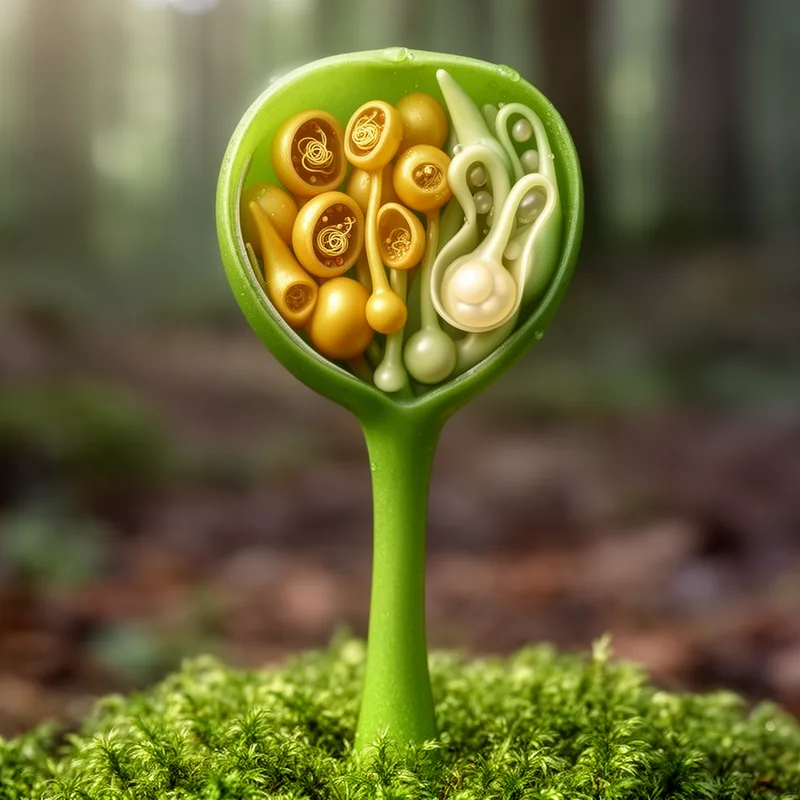
- Unlike dioicous forms, paroicous mosses produce eggs and sperm on the same shoot.
Examples
-
The paroicous arrangement can facilitate self-fertilization in certain bryophytes.
-
Some moss species are paroicous, with both antheridia and archegonia in the same cluster.
-
This moss is paroicous.
-
Look at that paroicous plant!
-
Some moss species are paroicous, where male and female reproductive organs are found in the same reproductive structure.
-
The paroicous arrangement in certain bryophytes allows for the presence of both antheridia and archegonia together.
-
Unlike dioicous forms, paroicous mosses can produce both eggs and sperm on the same shoot, enabling efficient reproduction.
Synonyms

 1
9.5

An animal or plant that has both male and female sex organs
A moss that has both sperm and eggs in the same structure
Surface Forms
Morphology
paroicous = paroic + ous
The element 'paroic-' is a specialized botanical combining form (related to Greek combining elements like -oec-), and the adjective-forming suffix '-ous' yields a technical term whose meaning is not deducible by average learners from the visible parts.
Etymology
The word paroicous comes from Greek parts para- meaning 'beside' and oikos meaning 'house', so it pictures male and female parts 'living beside' each other in the same small part of the plant.