
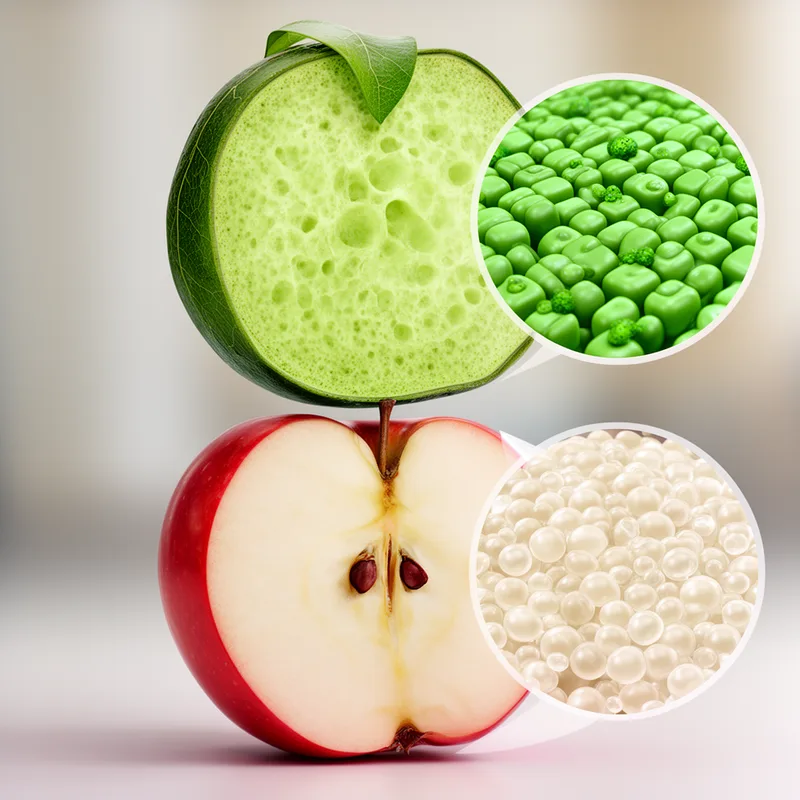
parenchyma
- noun
- /pəˈrɛŋkɪmə/
- Specialized
 :
parénquima
:
parénquima
- Greatly thickened stem tissues, composed mostly of large, thin-walled parenchyma cells, provide a huge reservoir of water that is stored in vacuoles; a fully hydrated cactus stem has a water content of 90-94%.
- lung parenchyma
Examples
-
The algal cells are usually arranged in a discrete layer just below the upper cortex of fungal tissue, like a densely packed, chloroplast-rich palisade parenchyma tissue.
Academic text (2001) -
In the center of the leaf, the parenchyma is filled with chloroplasts, enabling photosynthesis.
-
The superiority of CT can be seen during the evaluation of lung parenchyma's metastatic diseases.
Academic text (2007) -
It presents with recurrent hemorrhage and accumulation of hemosiderin in lung parenchyma.
Academic text (2007) -
CT scan (Figures 3 and 4) of the chest revealed one of the needles embedded in the myocardium, while the second was visualized in the left lung parenchyma.
Academic text (2007) -
The fleshy fruit contains soft parenchyma tissues that protect the seeds inside.
-
During the plant's growth, new parenchyma cells develop in the roots, allowing them to expand and absorb water.
Synonyms

 1
3.4
1
3.4

Parts inside a plant made of cells with different jobs
How Airy
- Specialized

- Specialized
Surface Forms
Etymology
Parenchyma comes from Greek parts para- 'beside' and enchyma 'poured in', which gives the image of soft cells 'poured into' the plant. So parenchyma is the common, soft plant tissue that fills leaves, fruit and stems and helps them store food and heal after damage.