
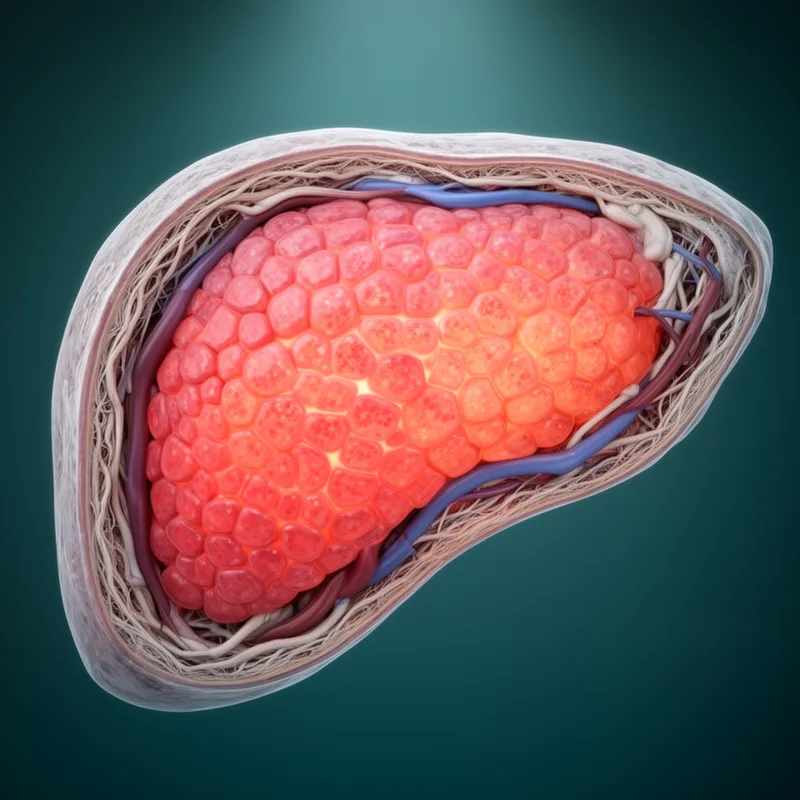
parenchyma
 1
9.9
1
9.9

- noun
- /pəˈrɛŋkɪmə/
- Specialized
 :
parénquima
:
parénquima
- The prognosis depends on whether the tumor is confined to the intraglandular node or has spread to the parenchyma.
- parenchyma of the liver
- lung parenchyma
- renal parenchyma
Examples
-
B-cell stain shows the parotid parenchyma infiltrated by lymphocytes.
Academic text (2004) -
High-resolution CT of the chest enables detailed assessment of lung parenchyma and has revolutionized the investigation of suspected idiopathic pulmonary fibrosis.
Academic text (2016) -
There was no invasion of cells beyond the capsule into the breast parenchyma.
Academic text (2015) -
Usually, this repair involves two distinct processes: regeneration and the replacement of injured tissue by parenchyma cells.
Academic text (2007) -
The cyst is in the spinal cord parenchyma or within the subarachnoid space, and imaging helps very little in this case.
Academic text (2016) -
The normal brain parenchyma structures, such as the cerebrum, cerebellum, and brain stem, are taken into consideration for slice match.
Academic text (2016) -
Fat embolism consists of the circulation of fat globules in the lung parenchyma and peripheral circulation after major trauma.
Academic text (2016) -
The mature flukes live in the bile ducts, and immature ones live in the parenchyma of the liver, very rarely in other organs.
Academic text (2014) -
The doctor explained that the parenchyma is crucial for organ function and is different from connective tissue.
-
Imaging revealed that the tumor had invaded the parenchyma, indicating a more serious condition.
Surface Forms
Etymology
Parenchyma comes from Greek parts para- 'beside' and enchyma 'poured in', a picture of soft material 'poured into' the inside of something. So parenchyma means the working tissue that fills an organ and does its main jobs, not the supporting parts.