
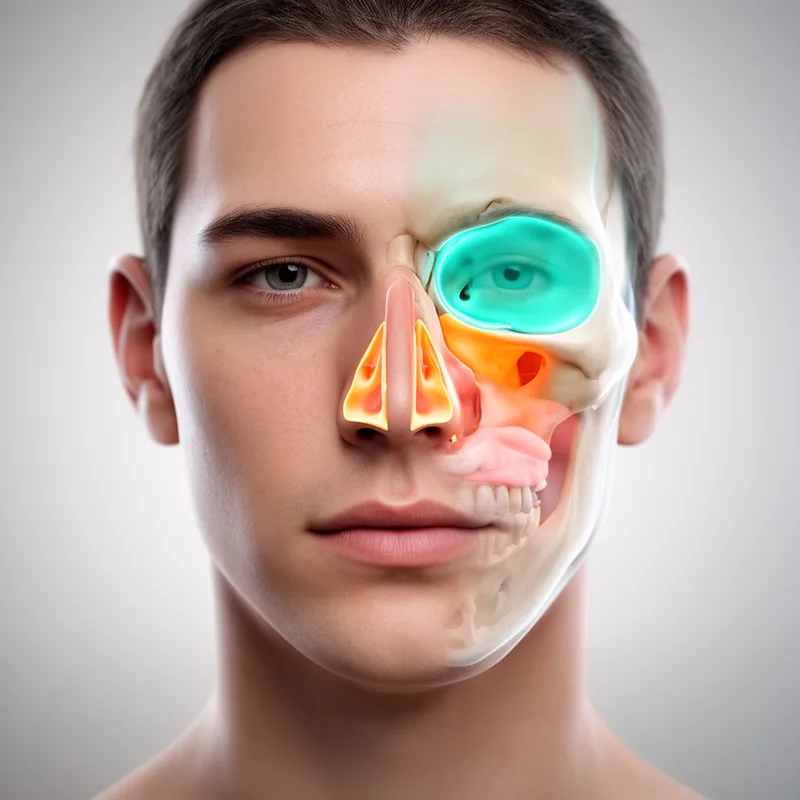
paranasal


 1
8.9
1
8.9
- adjective
- /ˌpærəˈneɪzl/
- Specialized
- Clinically, a patient's immune status determines the degree of fungal infection of the paranasal sinuses.
- paranasal sinuses
- paranasal anatomy
- infection of the paranasal
Examples
-
Most cases of head and neck infection involve the nasal cavity and paranasal sinuses.
Academic text (2008) -
Malignant peripheral nerve sheath tumors of the nose and paranasal sinuses are extremely uncommon.
Academic text (2004) -
Other types of fungus can involve the paranasal sinuses, but they appear to be very rare.
Academic text (2001) -
The first case showed a dramatic involvement of facial skin and muscles, orbit, and paranasal sinuses.
Academic text (2004) -
Of these six cases, only three appeared to originate from the paranasal sinuses or nasal vault.
Academic text (2005) -
Radiographic examination of the paranasal sinuses was carried out in 663 children.
Academic text (1998) -
Only a few cases of primary chordoma of the nasal cavities and paranasal sinuses have been reported in the literature.
Academic text (2005) -
A few chordomas have derived from the nasal cavity and paranasal sinuses.
Academic text (2005) -
The preferred treatment for malignant peripheral nerve sheath tumors of the nose and paranasal sinuses is wide local excision.
Academic text (2004) -
Radiographic examination of the paranasal sinuses was carried out in 663 children.
Synonyms

Close to the nose on the face
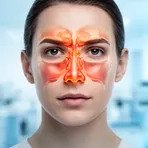
Relating to the nose and the sinuses
Compounds
- Specialized
1
5.4
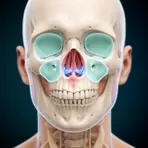
Air-filled spaces in the bones around the nose that connect to the inside of the nose
Surface Forms
Morphology
Etymology
The word paranasal comes from the parts para- ('beside') and nasal ('nose'). So paranasal means 'next to the nose' and is used for parts or areas beside the nasal cavities.