
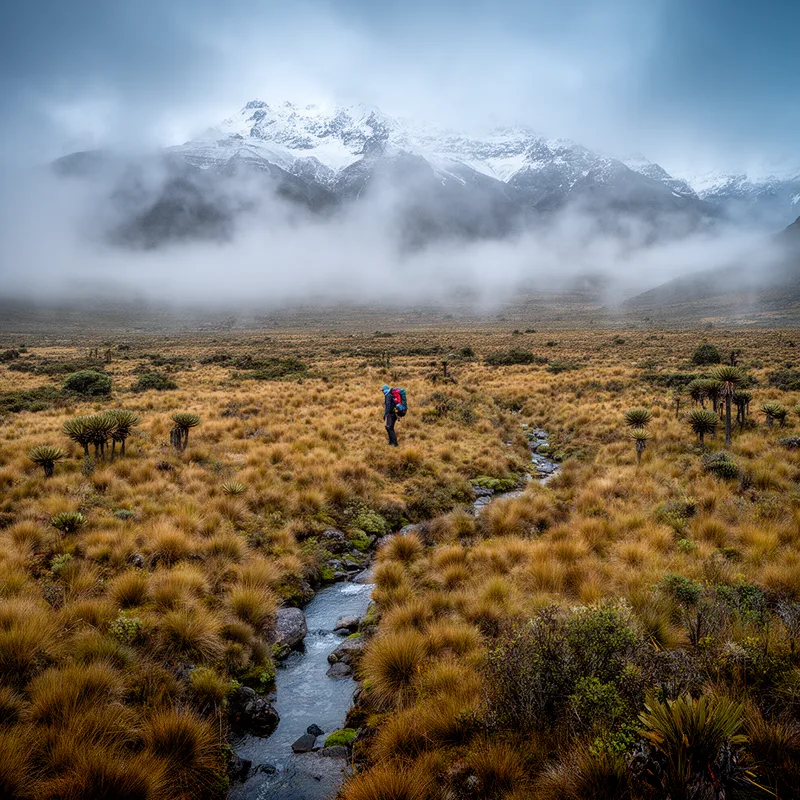
paramo


 1
9.9
- noun
- /ˈpærəmoʊ/
- As we ascended the Andes, the breathtaking view of the vast paramo landscape made the chilly hike worth it.
Examples
-
The herds, grazing in the paramo most of the year, were moved to the maize or potato fields after the harvest, a practice that supplied the land with organic fertilizer.
Academic text (1997) -
The last straw was an increase in rustling, which forced peasants to move their livestock from paramos to populated areas.
Academic text (1997) -
Neither was overpopulation an explanation, because 50 percent of the region was still covered in forest or paramo.
Academic text (1996) -
The village, houses, paramo (moor), and jungle are all places that have social meaning.
Academic text (1994) -
The second reason is that there is definitely an important wealth of biodiversity, in paramo, in flora, in fauna.
Academic text (1997) -
For Codazzi, the paramos were the distinguishing feature of the western mountains.
Academic text (1996) -
Founded on maize lands close to San Pablo Lake, the communities of Pijal Alto and Tocagon had been stretching upward into the potato and paramo zones to accommodate their growing populations.
Academic text (1997) -
In urban galleries and tourist shops, oil paintings depict neat mountain cottages, maidens hand-milking cattle, flowering paramos, and whitewashed colonial towns.
Academic text (1996) -
Once in the Andes, tourists admire or climb the snow-covered peaks, walk the wild paramos, explore the mountain towns, or visit Los Aleros, a re-created Andean village from the 1930s.
Academic text (1996) -
The local farmers relied on the nutrients found in the paramo to support their grazing livestock throughout the year.
Synonyms
 1
8.5
A high flat area in the mountains, especially in the Andes of South America
How High

Surface Forms
Etymology
The word paramo comes from Spanish páramo, which means 'wilderness' or 'barren plain'. It was used for the high, cold, treeless plateaus of the Andes, so paramo today names those cold, misty high grasslands.