
parallel
 5
3.7
5
3.7

- noun
- /ˈpærəˌlɛl/
- Specialized
- And what I can do is I can take two straight parallel lines coming out of the equator.
Examples
-
The teacher explained that the sides of a rectangle are parallel to each other.
-
So this my blue line, this green line is parallel to center back.
-
So now I can say that AB is parallel to CD.
-
If you have a line and a point that is not on that line, then there is a single unique line which will be parallel to the first line.
-
So we should say JK is parallel to LM.
-
I'm trying to go parallel to both the X axis and the Y axis so that you can see that this plane is perfectly parallel with the XY plane.
-
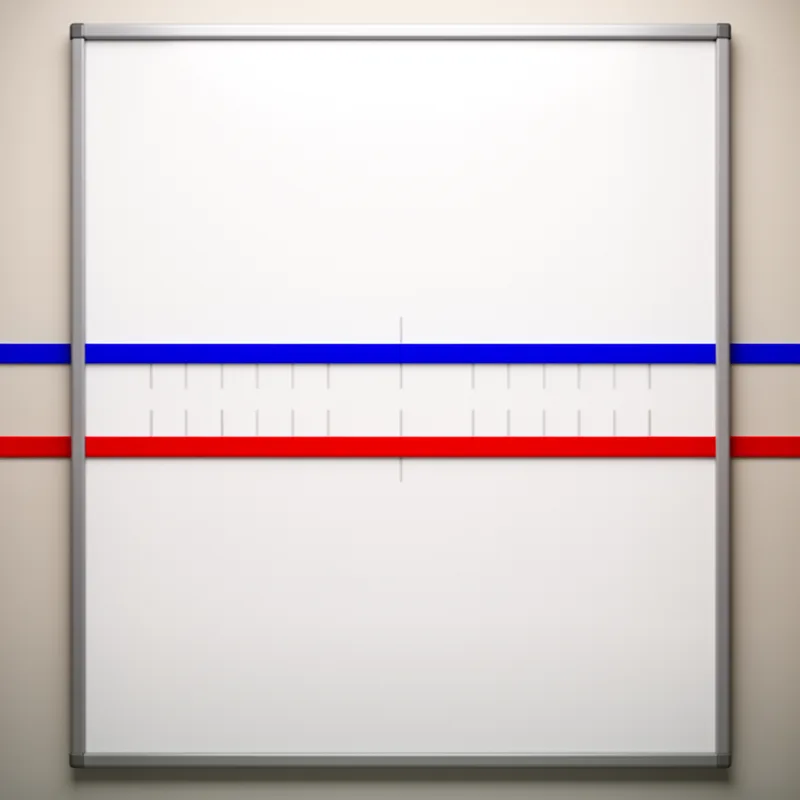
In geometry, two lines are considered parallel if they never intersect, no matter how far they are extended.
-
To graph the equation accurately, ensure that the two lines are parallel with equal distance between them.
Antonyms


Compounds


- Archaic

 1
4.3
1
4.3
A socket on a computer that connects devices like printers and sends data across many wires

- Specialized
1
4.3
Using two or more processors at the same time to do work faster

- Specialized
1
4.3
A closed path for electricity that splits into branches so devices work independently

- Archaic
1
5.7
A connection that sends many bits at once between a computer and a device like a printer


An imaginary horizontal line around the Earth that shows how far north or south a place is

- Specialized
Doing more than one task at the same time on computers or machines

- Specialized
In geometry, only one line through a point not on a given line does not meet it

- Literature
A book of short life stories about famous Greeks and Romans written by Plutarch

- Specialized
A leaf with veins that run parallel from the base to the tip like grass
How Perpendicular

Surface Forms
Etymology
Parallel comes from the Greek parts para- 'beside' and allēlōn 'one another', the same para- found in paragraph. In math, 'parallels' are lines or planes that stay 'side by side' at a constant distance and never meet.