

paraleipsis
- noun
- /ˌpærəˈlaɪp.sɪs/
- Literature
- ‘I won’t mention’ is a classic phrase employed to signal paraleipsis in speeches and writing.
Examples
-
The senator used paraleipsis to bring up her opponent’s scandals, saying she wouldn’t dignify them with discussion.
-
Writers sometimes use paraleipsis to imply something without stating it outright.
-
The speaker used paraleipsis to subtly highlight the issue.
-
Many writers employ paraleipsis in their arguments.
-
The senator used paraleipsis to bring attention to her opponent's scandals while claiming she wouldn't discuss them.
-
Writers often use paraleipsis to hint at important points without explicitly stating them.
-
In many speeches, the phrase ‘I won’t mention’ indicates the use of paraleipsis to draw attention to a topic indirectly.
Synonyms

To pretend not to mention something while actually making people notice it

Mentioning something briefly while pretending to ignore it draws attention
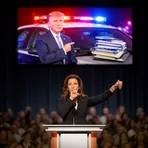
Saying you will not talk about something to draw attention to it

Briefly mention something while saying you will not give the important details
Surface Forms
Etymology
Paraleipsis comes from Greek parts para- ('beside' or 'near') and leipsis ('leaving out'), and it is like the familiar English word ellipsis, which also shows an omission. That's why paraleipsis means drawing attention to something by saying you will not mention it — you 'leave it out' but still point to it.

