
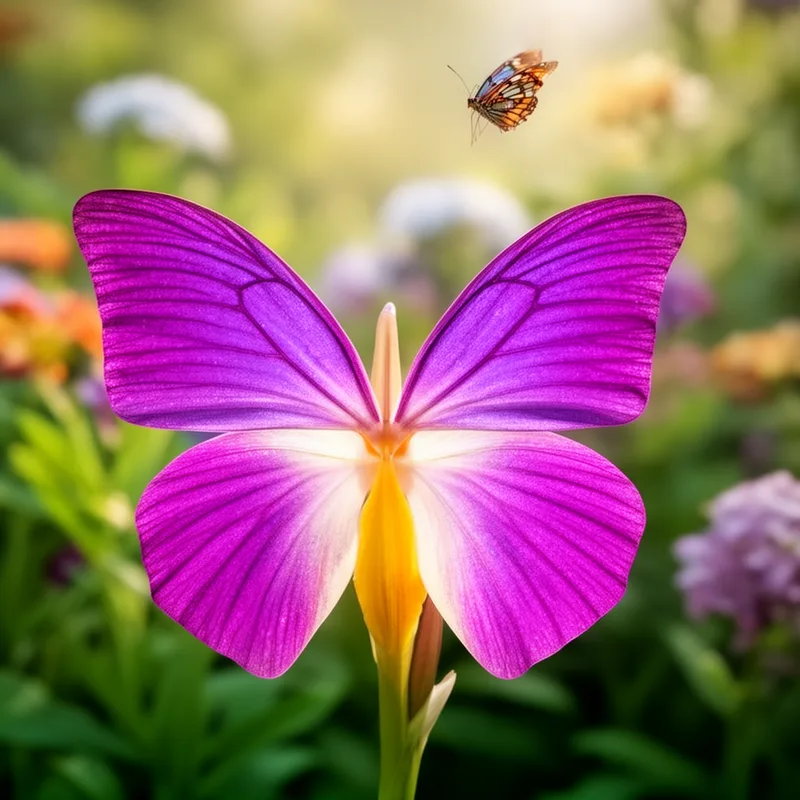
papilionoid


 1
9.9
- adjective
- /ˌpæpɪˈleɪənɔɪd/
- Specialized
- Scientists described the new species as having distinctly papilionoid petals.
Examples
-
The orchid has a papilionoid structure that helps attract specific pollinators.
-
The papilionoid flowers attract many pollinators.
-
The papilionoid appearance of the flower makes it stand out in the garden.
-
Many papilionoid species thrive in tropical climates.
-
The orchid has a papilionoid structure that helps attract specific pollinators.
-
Scientists described the new species as having distinctly papilionoid petals.
-
The papilionoid appearance of the flower makes it stand out among other blooms.
Surface Forms
Morphology
papilionoid = papilion + oid
Built from the technical combining form 'papilion-' and '-oid'; because the combining form is not a common standalone English word and the usage is scientific, the composition is not transparent to average learners.
Etymology
Papilionoid comes from the Latin word papilio ('butterfly') and the ending -oid ('like'). It simply means 'butterfly-like', which is why scientists use it to describe petals or flower parts that look like a butterfly.