
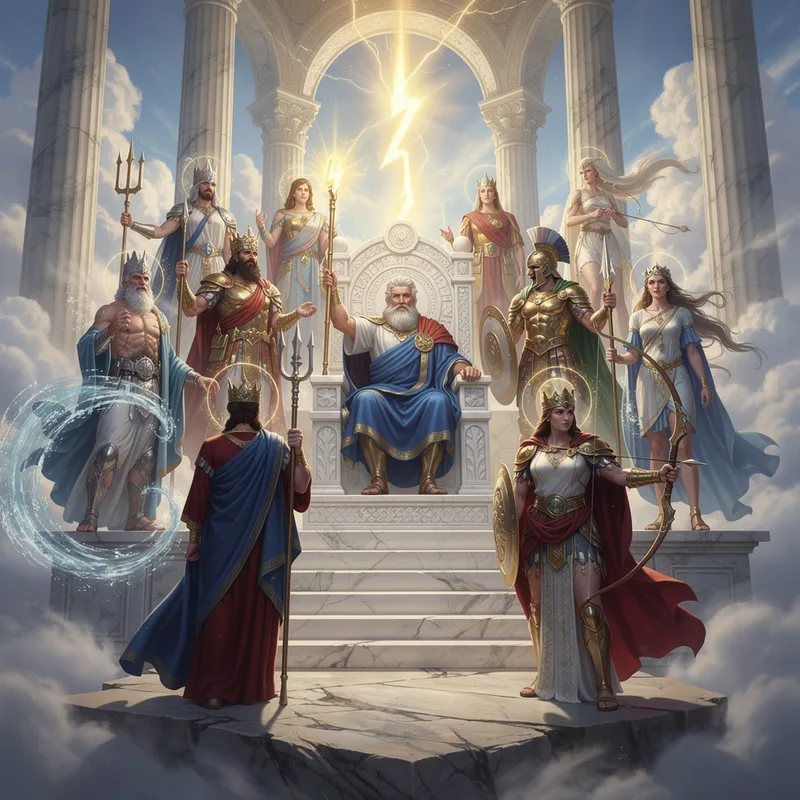
pantheon
 11
7.9
11
7.9

- noun
- /ˈpænθiən/
- Literature
- Consequently, many prominent Mesopotamian deities, such as Enlil, the chief God of the pantheon, were related to wind, air and storms.
- pantheon of deities
- worship of a pantheon
- pantheon of gods
Loading YouTube…
Watch on YouTubeSo the Greeks had, you know, the pantheon of The Olympian gods who had displaced the Titans.
- So the Greeks had, you know, the pantheon of The Olympian gods who had displaced the Titans.
Examples
-
This was the polytheistic belief system with a wide pantheon of gods.
-
The Powhatans believed in a pantheon of deities, most of them with only limited power.
Academic text (1992) -
Well, we'll just add those into our pantheon of gods too.
-
And let us not forget the Egyptian pantheon: deities with human bodies and animal heads.
Fiction book (2001) -
So the Greeks had, you know, the pantheon of The Olympian gods who had displaced the Titans.
-
The Hurrians had a distinct pantheon of deities, led by Kumbari, the god of the underworld.
Academic text (2008) -
The Nordic-Germanic pantheon consisted of two families of divinities: the Aesir and the Vanir.
Academic text (1990) -
India's Hindu majority adheres to a polytheistic pantheon and gives goddesses an important role in it.
Academic text (1990) -
In ancient Roman religion, Jupiter was the king of the gods in their pantheon.
-
The Greek pantheon includes many famous gods like Zeus, Athena, and Apollo.
How Distinguished

Surface Forms
Morphology
Etymology
Pantheon comes from Greek pan- 'all' and theos 'god'. So a pantheon is literally 'all the gods', which is why it means the full group of gods in a religion.