
pandanus
- noun
- /ˈpændənəs/
- Specialized
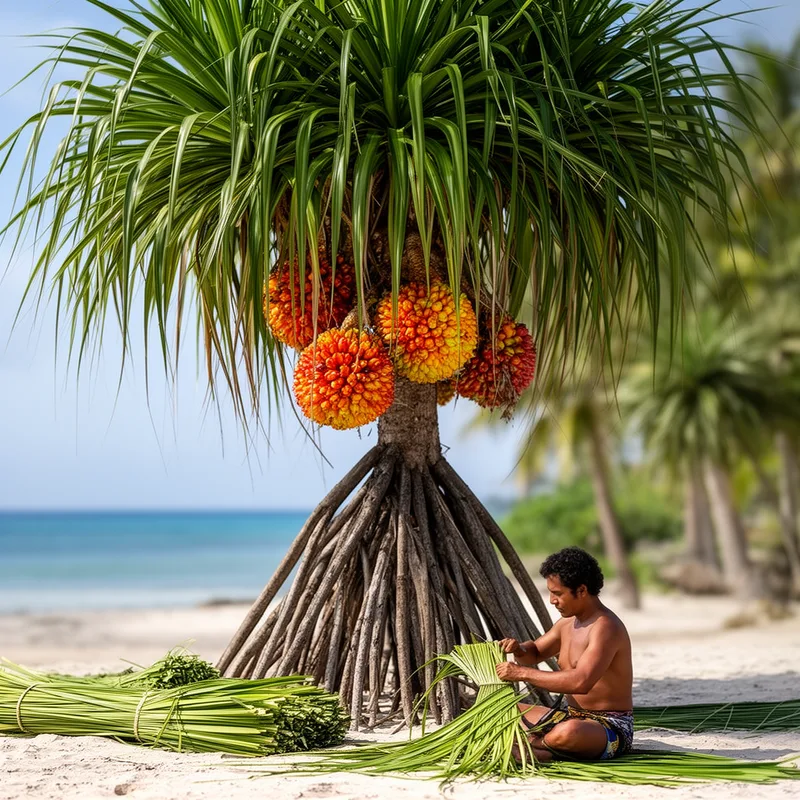
- Pandanus or screwpine is a widespread tropical genus, including species grown for edible nuts, fruits ("keys"), and as a culinary herb.
- pandanus trees
Examples
-
The pandanus plant thrives in tropical climates, producing cone-shaped fruits that are edible.
-
Other tree crops include coconut, pandanus, and betel.
Academic text (1992) -
Most sorcerers are men, and women who practice sorcery wear the traditional male garment of strips of incised wild pandanus leaf wound around the hips and between the legs.
Academic text (1991) -
Nut and fruit trees (pandanus, coconut, breadfruit, mango, papaya) are grown adjacent to houses in the village or in gardens that are an easy walk away.
Academic text (1991) -
The villagers use the long leaves of the pandanus to weave baskets and mats for their daily activities.
-
Pandanus is often found near coastal areas, where its roots help prevent soil erosion.
Synonyms

A tropical tree with strong roots that grow above the ground, long narrow leaves, and conelike edible fruit

A group of tropical plants called screw pines that includes many species
Compounds
- Specialized
A group of tropical plants called screw pines that includes many species

- Specialized
A tree by the sea with long leaves and fruit people eat and use for weaving
Surface Forms
Etymology
Pandanus comes from the Malay word pandan, the local name for a tropical tree with long leaves, stilt-like roots and cone-shaped fruit. Because people in Southeast Asia and the Pacific use its leaves for cooking and its fruit for food, English kept that name for the tree.

