
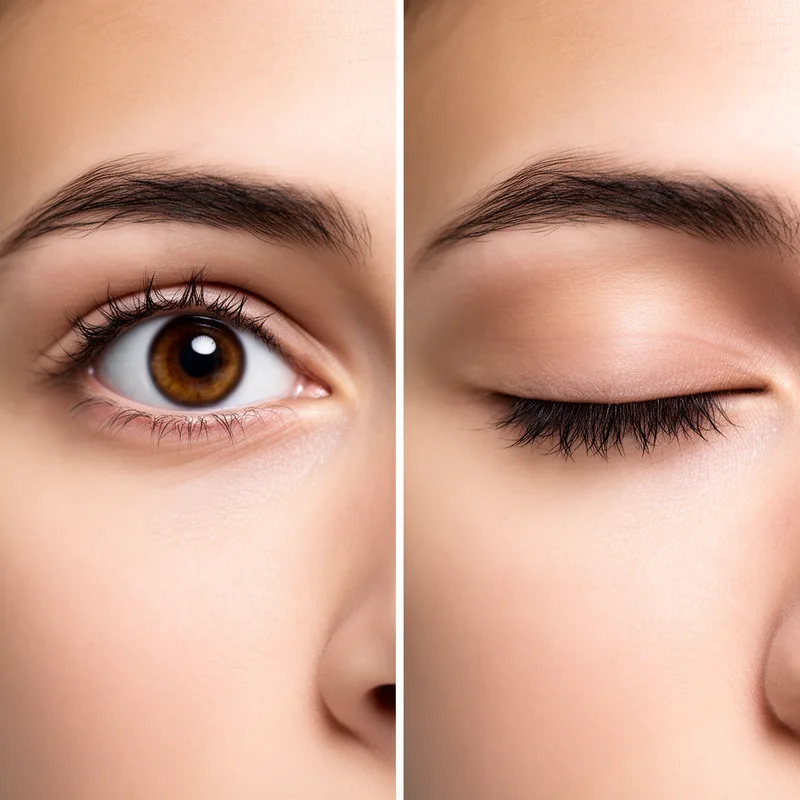
palpebrate
- adjective
- /ˈpæl.pə.breɪt/
- Specialized
 :
con párpados
:
con párpados
- Most mammals are palpebrate creatures, unlike some snakes and fish.
Examples
-
The palpebrate eyelids of the owl help it see at night.
-
The study compared palpebrate and non-palpebrate species to understand evolutionary adaptations.
-
Certain amphibians develop palpebrate features during metamorphosis.
-
Some animals have palpebrate features to protect their eyes.
-
Most mammals are palpebrate creatures, unlike some snakes and fish.
-
Certain amphibians develop palpebrate features during metamorphosis.
-
Some animals have palpebrate features to protect their eyes.
Surface Forms
Morphology
palpebrate = palpebra (opaque) = palpebr + ate
Formation involves a learned anatomical base ('palpebra') plus the suffix '-ate'; both elements are not transparent to average learners.
Etymology
Palpebrate comes from the Latin palpebra 'eyelid'. So to be palpebrate simply means 'having eyelids', which is why we call some animals palpebrate and others not.

