

palaver
 2
8.8
2
8.8

- noun
- /pəˈlævər/
- Informal
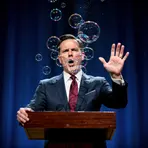
- The politician was known for his lengthy palaver, but his promises often turned out to be hollow.
Examples
-
"Now we can stop all this tedious palaver and have fun," Hoxton said when Lefarn brought the good news.
Fiction book (2001) -
"Well, I never heard such a palaver about an old house," Peter said.
Fiction book (1997) -
All this palaver is just not going to work.
Fiction book (1995) -
You and me gotta have a quick palaver.
-
Lily's charge against the men of today is that they are "all palaver," all talk.
Academic text (1991) -
Despite the ongoing palaver about the project, very little action has been taken to implement the changes.
-
During the meeting, the team grew weary of the endless palaver that lacked any real substance.
Synonyms
 279
8.0
279
8.0
A prepared phrase used to try to impress someone
 265
7.0
265
7.0
Words that sound impressive but have little real meaning
 24
8.6
24
8.6
Empty showy talk with little real meaning
 18
7.9
18
7.9
A long talk that tries to convince people to buy something
 17
5.3
17
5.3
Talk that sounds important but has no real meaning
 17
7.2
17
7.2
Loud talk that tries to impress but has little real effect
 5
7.4
5
7.4
Fast smooth talk used by salespeople to persuade people
 3
4.3
3
4.3
Flattering words that try to persuade someone but are not sincere
 3
5.1
3
5.1
Talk that has no real meaning and is not useful
 2
9.8
2
9.8
A friendly compliment meant to persuade someone to do something


 1
4.3
1
4.3
Words that sound important but have no real meaning or action
 1
9.9
1
9.9
Talk that brags and makes things sound bigger than they are
 1
8.4
1
8.4
Gentle praise and kind words used to get someone to do something

Talk that brags and sounds false

Smooth talk used to convince people, often by salespeople

Light talk about unimportant, silly things people say
Antonyms


How Sincere

Surface Forms
Etymology
Palaver comes from the Portuguese word palavra 'word', and when long trading talks became common, the word began to feel like showy or empty speech. So, palaver as a noun means elaborate or insincere talk that aims to impress or persuade rather than give real answers.