
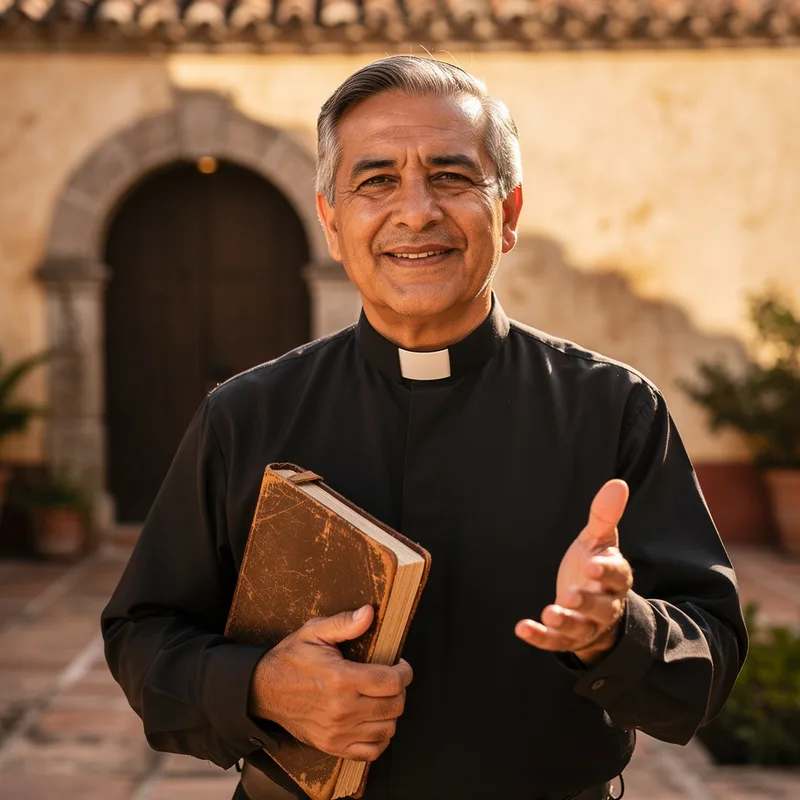
padre
 30
6.2
30
6.2

- noun
- /ˈpɑːdreɪ/
- "You must understand that in those days, the padres held much power.
Loading YouTube…
Watch on YouTubeSo Dora left with her hair head hanging low and I went up and said, Dora, let's go talk to the Padre and senor.
- So Dora left with her hair head hanging low and I went up and said, Dora, let's go talk to the Padre and senor.
- So for Father's Day, I was like Felicia del Padre, like the quiero blah, blah, blah.
- Because Padre, that is very much like, no, it does take a lot from a parent to be like, you know what?
Examples
-
The tall, thin padre followed beside him, with what looked like layers of thin white bark.
Fiction book (1995) -
The Lesser River, the one the padres called Rio Conchos.
Fiction book (1995) -
Let's hear it for the padre.
-
Padre and I did AA together.
-
Because when he was a young man, he saw the padre who returned from the Sacramento Valley.
Fiction book (1991) -
Isn't that so, Padre, isn't that so?
-
Tonight at the market, I meet a Spanish Franciscan named Padre Marlo.
Fiction book (1996) -
The natives discovered the padres liked the gold, and it meant nothing to the Indians.
Fiction book (1991) -
I stared at the old padre, admiring the way he had performed this miracle.
Fiction book (1995) -
The children gathered around the padre as he told them stories from the Bible.
Synonyms
 ∞
1.0
∞
1.0
A man who has a child
 ∞
1.0
∞
1.0
An informal name a child uses for their father
 ∞
1.0
∞
1.0
A person who leads religious ceremonies and worship in a church or temple
 98
9.0
98
9.0
A father or grandfather someone calls in a loving way
 83
1.6
83
1.6
An informal word a child uses for their father

A man who is the father of a woman's child, often when they are not together
Surface Forms
Etymology
Padre comes from Spanish and Italian and from the Latin root pater, which means 'father'. Catholic priests were often called 'spiritual fathers', so padre came to mean both a priest and, informally, a father.