
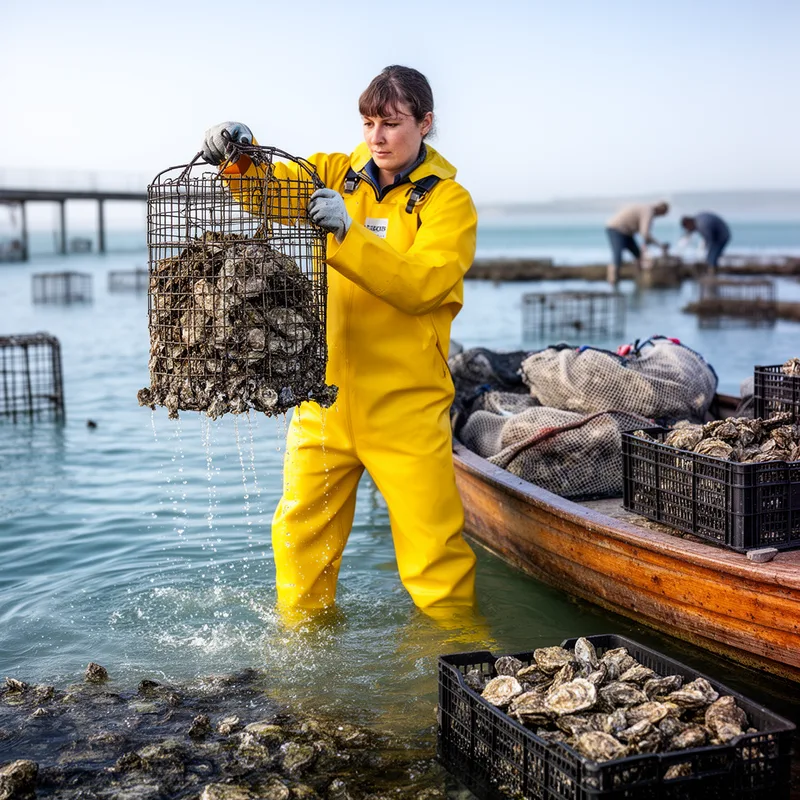
oystering
- noun
- /ˈɔɪstərɪŋ/
- The first commercial oystering operations began in the early 1800s in estuaries near the Mississippi Delta.
- oystering area
- main oystering
- oystering history
Examples
-
The main oystering season begins on October 1st.
Academic text (1996) -
A record kept by one Crisfield oysterman showed that during the 1901-02 oystering season, there were 203 legal working days.
Academic text (1996) -
The ports used for oystering were in the western part of the bay.
Academic text (1990) -
New Haven Harbor, Conn., once was the major oystering area in New England.
Academic text (1996) -
Louisiana oystering operations somewhat resemble those in Delaware Bay.
Academic text (1996) -
The earliest history of Bedeque Bay oystering remains incomplete, for there are no known shell middens on its shores.
Academic text (1996) -
In 1834, oystering was the largest industry in Perth Amboy (Gordon, 1973).
Academic text (1990) -
The bottoms of Puget Sound and Willapa Bay oystering areas consist of gravel-sand or mud.
Academic text (1996) -
Undoubtedly, the number was substantially larger from the 1870s to the early 1900s, when at least 600 men were engaged in oystering alone (see also the later section, The Shellfishing Ports).
Academic text (1990) -
The main activity of oystering involves harvesting oysters from local waters.
Synonyms
A business that catches or grows sea animals with shells like oysters and clams
Surface Forms
Morphology
Etymology
Oystering comes from the word oyster, which itself comes from an old Greek word ostreon meaning 'shellfish' or 'shell'. So oystering is simply the activity of collecting those shellfish from the sea, which is why it means harvesting oysters.

