

to overseed


 1
4.9
1
4.9
- verb
- /ˌoʊvərˈsiːd/
- After a dry summer, the gardener decided to overseed the entire yard.
- overseed your lawn
- fairways are overseeded
Loading YouTube…
Watch on YouTubeThat's the best time to plant your now also carrot seeds, they have very low germination rate and so I will typically find that I have to overseed.
- That's the best time to plant your now also carrot seeds, they have very low germination rate and so I will typically find that I have to overseed.
Examples
-
They overseeded the grass last fall.
-
It is best to overseed your lawn in early autumn for thicker grass next spring.
-
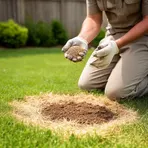
Many homeowners overseed to repair bare patches and keep their lawns looking green.
-
I will overseed the lawn this spring.
-
To create a lush lawn, many homeowners choose to overseed their existing grass with a higher quality seed.
-
In the fall, it's ideal to overseed your lawn to ensure it stays healthy through the winter months.
-
He decided to overseed the bare patches in his yard to encourage thicker grass growth.
Synonyms
 1
4.2
1
4.2
To plant seeds again to restore grass or crops

To sow seeds over existing grass or plants to improve growth

Cover an area of land with short green plants like those on a lawn

To cover an area with short green plants so it looks like a lawn
How Thorough

Surface Forms
Morphology
Etymology
Overseed is made of over- and seed, where over- means 'on top of' and seed is what you plant, so it gives the image of putting seeds on top of an existing lawn. That's why to overseed is to plant new grass seed over old grass to make the lawn thicker or fix bare patches.