
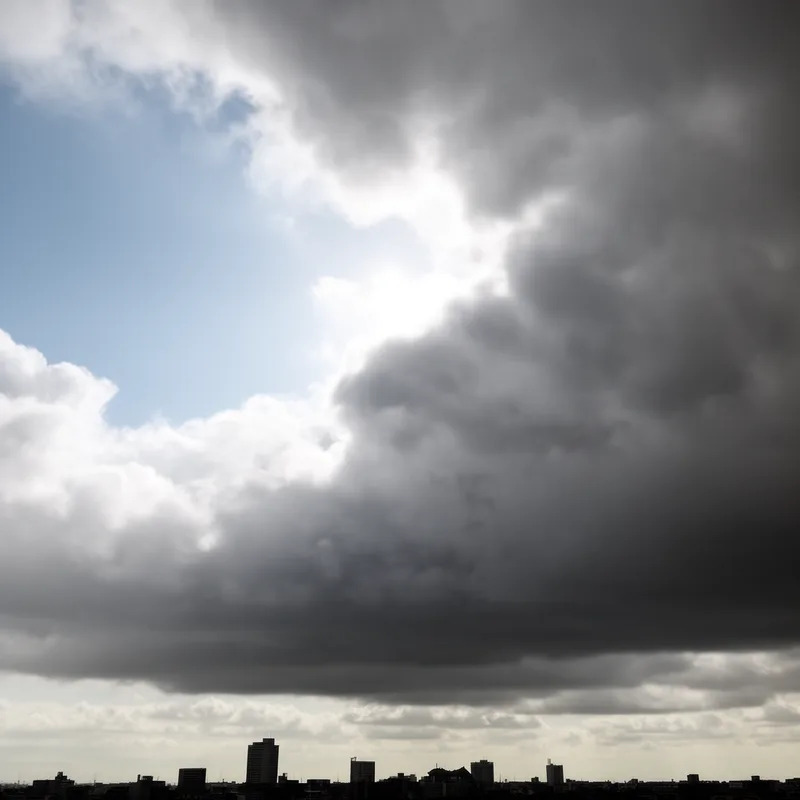
to overcloud
- verb
- /ˌoʊvərˈklaʊd/
- The sky began to overcloud just before the afternoon storm arrived.
Examples
-
By mid-morning, the sun had vanished as heavy gray clouds overclouded the skyline.
-
It started to overcloud just before the picnic.
-
As the temperature dropped, the horizon seemed to overcloud rapidly.
-
The sky began to overcloud in the afternoon.
-
The sky began to overcloud as the storm approached, blocking out the sunlight.
-
By noon, dark clouds started to overcloud the brilliant blue sky, signaling rain was on its way.
-
As the afternoon progressed, the bright day began to overcloud, making it feel much cooler.
Synonyms

 56
4.4
56
4.4

To make something less clear or bright by covering it
 1
3.2
1
3.2
To become cloudy in the sky


 1
3.4
1
3.4
The sky becomes covered with clouds and looks less bright

To cover the sky with clouds and make it look dark
How Cloudy

Surface Forms
Morphology
Etymology
Overcloud comes from the parts over- ('above' or 'too much') and cloud, so it literally means to 'cover with clouds' — like when the sky fills with gray and the sun disappears.