
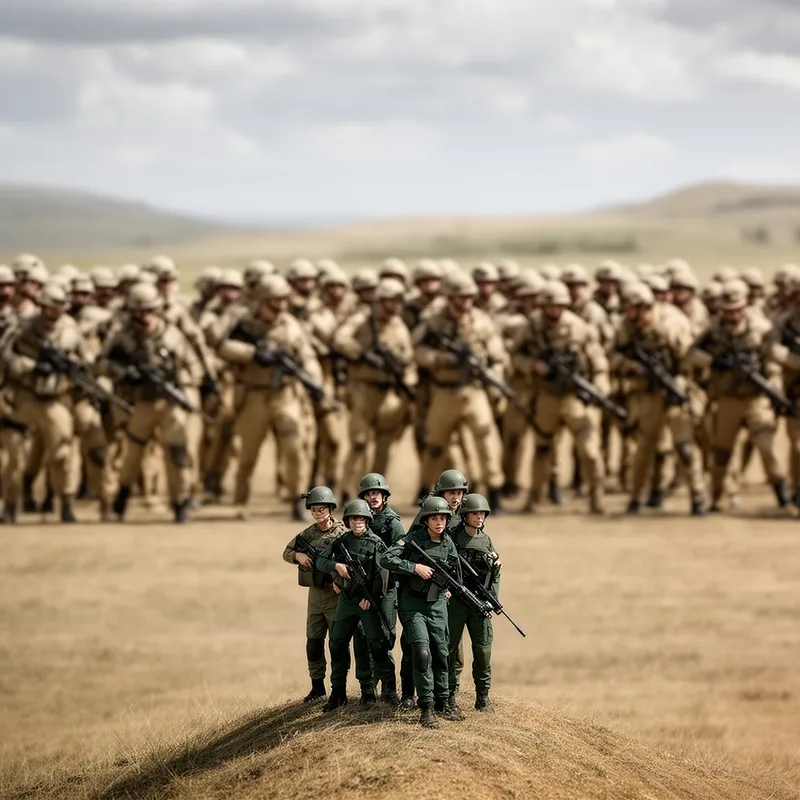
to outman


 1
7.7
Have fewer people than the other side in a fight or contest
- verb
- /ˌaʊtˈmæn/
:
superar en número
- And my troops outman you three to one.
Examples
-
Our team will outman the opponents by recruiting more players for the match.
-
We outman them.
-
During the competition, they managed to outman their rivals, securing a strategic advantage.
-
To win the battle, we must outman the enemy forces with double our troops.
Synonyms

to overmatch
vsto outman
8
7.1
To be much weaker than an opponent in a fight or competition
focuses on having greater numbers rather than overall strength
How Many
to overrun
28
4.8
28
4.8

to outman
1
7.7
1
7.7
Surface Forms
outman infinitive
outmanned past
outmanned past participle
outmanning present participle
outmans third person singular
Morphology
Etymology
Outman combines out- meaning 'more' and man meaning 'person' or 'soldier', as in manpower, giving a simple picture of one side having extra people. So, to outman someone is to have more people than your opponent, which is why the word is used for battles and competitions.