
osteoma


 1
9.7
- noun
- /ˌɑːstiˈoʊmə/
- Specialized
- However, surgical removal is indicated when the growth of the osteoma causes distressing symptoms or cosmetic issues.
- mastoid osteoma
- turbinate osteoma
- extracanalicular osteomas
Examples
-
The patient described in this report had no symptoms but underwent surgical excision of a mastoid osteoma for cosmetic reasons.
Academic text (2008) -
Bone formation in the paranasal sinuses in the form of an osteoma is well known.
Academic text (2009) -
In this report, a new case of inferior turbinate osteoma is described.
Academic text (2010) -
In this report, a case of inferior turbinate osteoma in a 24-year-old woman is described.
Academic text (2010) -
However, Morocco reported a case of multiple osteomas of the mastoid process that were growing from the inner table.
Academic text (2008) -
Histology revealed a mastoid osteoma of the compact type (figure 4).
Academic text (2008) -
Histopathologic evaluation of the resected specimen identified it as an osteoma (Figure 2).
Academic text (2010) -
We present a rare case of a 25-year-old woman with a mastoid osteoma enlarging over a 6-month period.
Academic text (2008) -
Fleming reported a case of osteoma of the mastoid process associated with unilateral hypertrophy of the mandible.
Academic text (2008) -
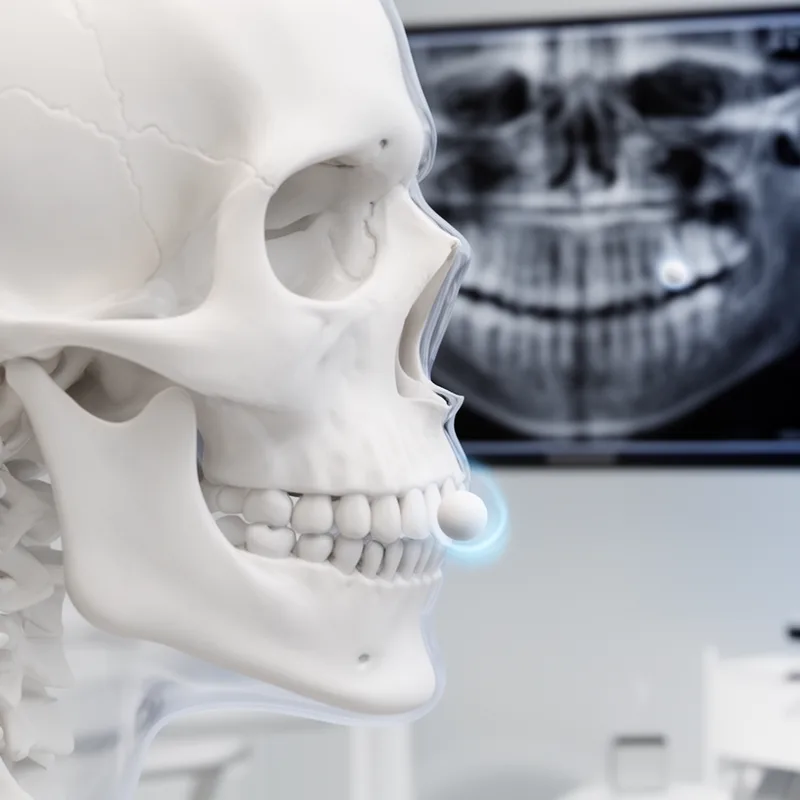
A patient was diagnosed with an osteoma on her skull after experiencing mild headaches.
Surface Forms
Morphology
osteoma = osteo- (opaque) = osteo + oma
Built from Greek combining forms 'osteo-' (bone) + '-oma' (tumor); these combining forms are technical and not familiar standalone English words, so learners are unlikely to infer the meaning reliably.
Etymology
Osteoma comes from the Greek parts osteon 'bone' and -oma 'tumor' or 'swelling'. So an osteoma is literally a 'bone tumor', a slow-growing, usually non-cancerous lump of bone often found on the skull or jaw.