
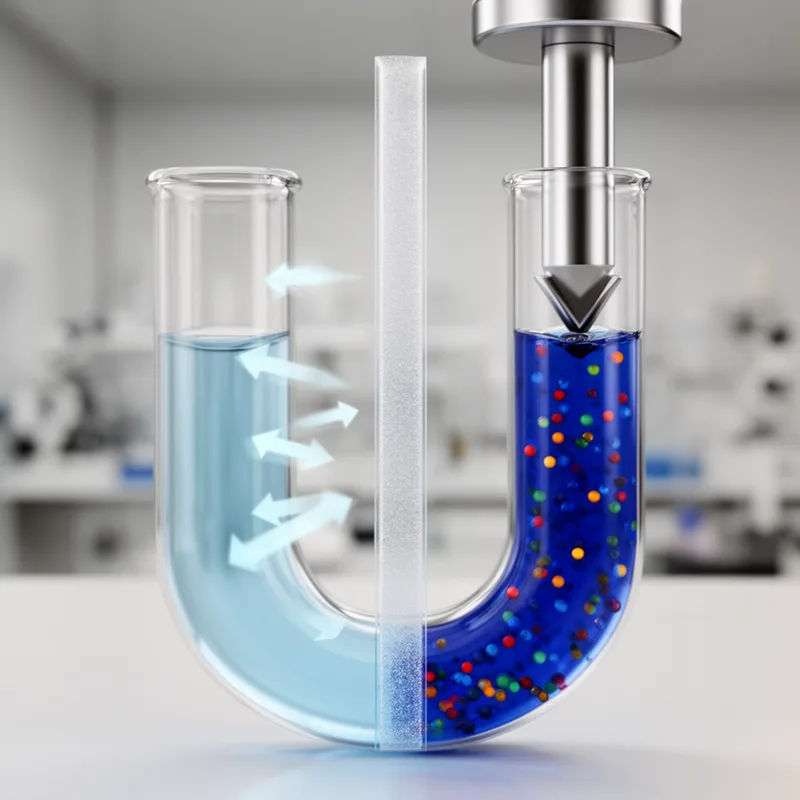
osmotic pressure


 1
6.1
1
6.1
- noun
- /ˌɑzˈmɒtɪk ˈprɛʃər/
- Specialized
- Chlorine occurs in body fluids, where it helps regulate osmotic pressure and maintain tissue pH levels.
Examples
-
But the salt is, is drawing through osmotic pressure is going to draw the water out of those, the meat cells, right?
-
If you are at the osmotic pressure you you are in equilibrium and nothing moves on average.
-
Few species can survive in the highly saline water, which (because of osmotic pressure) tends to extract water from an animal's cells upon contact; without proper protection, small planktonic organisms suffer fatal dehydration in such an environment.
Academic text (1994) -
Osmotic pressure helps control the movement of osmotic pressure across cell membranes in living organisms.
-
The scientist measured the osmotic pressure to determine how much water would move into the solution.
-
High osmotic pressure can lead to the influx of water, causing cells to swell and potentially burst.
Surface Forms
Morphology
The compound is directly compositional: 'osmotic' relates to osmosis (movement of solvent through a membrane) and 'pressure' is force, so together they denote the pressure associated with osmosis. Although the precise technical nuance (the pressure required to prevent solvent flow) is specialized, the general concept is transparently predictable from the known constituents.
Etymology
The term osmotic pressure comes from a simple image: osmotic describes water moving through a thin 'membrane' toward the stronger solution, and the word pressure is the force you must apply to stop that movement. So, osmotic pressure means the amount of force needed to prevent water moving by 'osmosis'.