
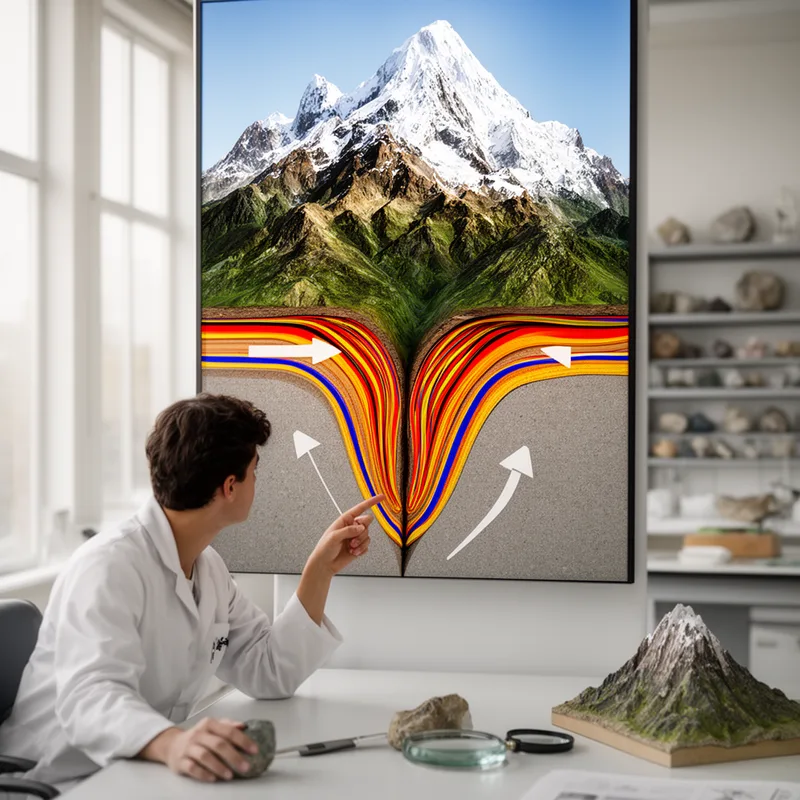
orography


 1
9.9
- noun
- /əˈrɑːɡrəfi/
- Specialized
- The study of orography helps scientists understand how mountains affect local climates.
Examples
-
Researchers in geology often focus on orography to explore the formation of mountain ranges.
-
One reason for major stratospheric warmings to occur in the Northern Hemisphere is that orography and land-sea temperature contrasts are responsible for the generation of long (wavenumber 1 or 2) Rossby waves in the troposphere.
Blog text (31) -
The professor explained that orography examines the distribution and characteristics of mountain terrain.
Synonyms
 16
6.5
The shape and features of an area, like hills, rivers and buildings
The study of mountains, how they form and where they are
Surface Forms
Morphology
orography = orograph (opaque) = orograph + y
Both 'oro-' and '-graphy' are Greek combining forms unfamiliar to average B1 learners, so the meaning 'study of mountains' is not transparently derived from known English base words.
Etymology
The word orography comes from Greek parts oros meaning 'mountain' and -graphy meaning 'writing' or 'description', with the same graph you see in photograph or autograph. So orography is like the 'writing' or description of mountains, meaning the study of their shape and how they form.